Andy Warhol: The Artist Who Made Everyday Life Pop
Andy Warhol was one of the most influential artists of the 20th century. A leading figure in Pop Art, he transformed familiar images of consumer goods, film stars and public figures into works that challenged ideas about art, fame and mass production. His bold style and fascination with popular culture continue to shape how artists and audiences think about images today.
From Pittsburgh to New York
Warhol was born Andrew Warhola in Pittsburgh, Pennsylvania, on 6 August 1928. After studying commercial art at the Carnegie Institute of Technology, he moved to New York in 1949 and built a successful career as an illustrator and graphic artist. This experience in advertising and publishing would later inform his distinctive approach to fine art.
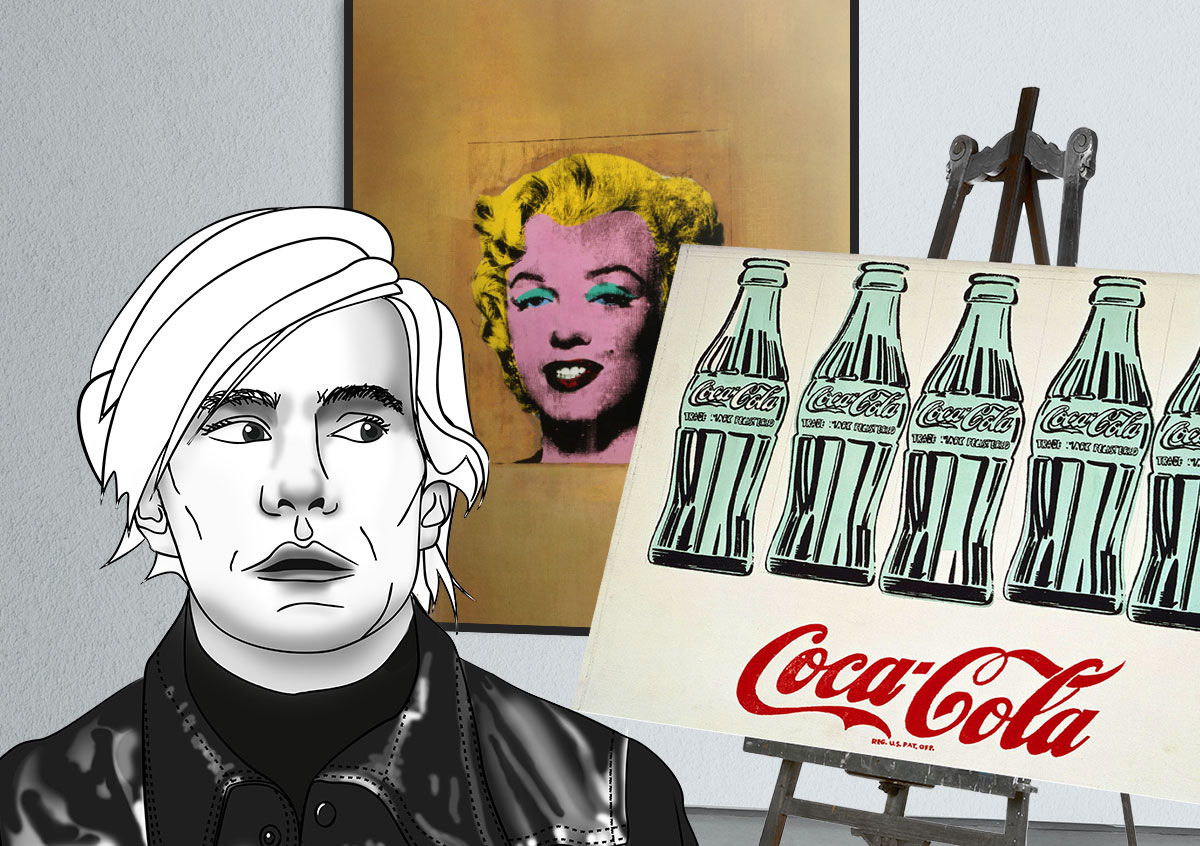
In the early 1960s, Warhol began creating works based on familiar products and celebrities. His Campbell’s Soup Cans and depictions of stars such as Marilyn Monroe drew on the visual language of advertising and newspapers. By presenting ordinary images as art, he blurred the boundaries between popular culture and the gallery.
Repetition, celebrity and consumer culture
Warhol often used silkscreen printing, a technique that allowed him to reproduce images repeatedly. Variations in colour, alignment and printing quality meant that each version could look slightly different. The repetition echoed the way products and photographs circulate through modern life, while also raising questions about originality and the value placed on a unique artwork.
His best-known works include Campbell’s Soup Cans (1962), Marilyn Diptych (1962) and his images of Coca-Cola bottles and Brillo boxes. These works are visually direct, yet they invite broader interpretations. They can be read as celebrations of popular culture, as observations of consumer society, or as reflections on how fame can turn a person into a widely reproduced image.
The Factory and beyond
Warhol’s New York studio, known as the Factory, became a meeting place for artists, musicians, actors and other creative figures. It was both a workplace and a hub for experimentation. Warhol also made films, produced music projects and founded the magazine Interview in 1969, extending his interest in celebrity and media beyond the gallery.
In 1968, Warhol was shot and seriously injured by writer Valerie Solanas. He survived, but the attack had lasting effects on his health and his life. He continued to work, taking on new projects and collaborating with artists and clients in the years that followed.
A lasting influence
Andy Warhol died in New York on 22 February 1987. His influence remains evident across contemporary art, design, fashion and popular media. His work anticipated a culture in which images are endlessly reproduced, shared and consumed. By turning ordinary objects and familiar faces into art, Warhol changed the way people see both the everyday world and the power of an image.
Andy Warhol: 9 Key Facts About His Life and Art
- Learn that Andy Warhol was born in Pittsburgh in 1928.
- Remember that his birth name was Andrew Warhola.
- Explore how he helped shape Pop Art.
- Look at his famous Campbell’s Soup Cans series.
- Notice his colourful portraits of Marilyn Monroe.
- Learn how he used silkscreen printing to make art.
- Discover The Factory, his New York studio.
- Explore his experimental films and music projects.
- Remember that he died in 1987.
Learn that Andy Warhol was born in Pittsburgh in 1928.
Andy Warhol was born in Pittsburgh, Pennsylvania, in 1928. His early years in the city came before he became one of the most influential artists of the 20th century and a leading figure in Pop Art.
Remember that his birth name was Andrew Warhola.
Andy Warhol was born Andrew Warhola on 6 August 1928 in Pittsburgh, Pennsylvania. He later became known professionally as Andy Warhol, the name associated with his influential work in Pop Art. Remembering his birth name offers a small glimpse into the artist’s early life, before he became one of the most recognisable figures in modern art.
Explore how he helped shape Pop Art.
Andy Warhol helped shape Pop Art by bringing the imagery of everyday consumer culture into the gallery. Drawing on his experience in commercial illustration, he transformed familiar products, advertisements and celebrity photographs into bold artworks, often using silkscreen printing to repeat images in vivid colours. Works such as Campbell’s Soup Cans challenged the distinction between fine art and mass-produced imagery, while his portraits of stars explored the relationship between fame and media. His playful, sometimes provocative approach became central to Pop Art and influenced generations of artists.
Look at his famous Campbell’s Soup Cans series.
Look at Andy Warhol’s famous Campbell’s Soup Cans series, created in 1962. By presenting familiar soup tins as works of art, Warhol challenged the distinction between everyday consumer goods and fine art. The repeated images also reflect the mass production and advertising that shaped modern life, while small variations in colour and detail give each canvas its own character.
Notice his colourful portraits of Marilyn Monroe.
Look closely at Andy Warhol’s colourful portraits of Marilyn Monroe, where vivid backgrounds and bold, repeated images turn the film star into an instantly recognisable icon. Notice how shifts in colour and small variations in the printed image make each portrait feel different, while also reflecting the way celebrity photographs are reproduced and shared.
Learn how he used silkscreen printing to make art.
Andy Warhol used silkscreen printing to turn familiar images into bold, repeatable works of art. The process transferred ink through a fine mesh screen, allowing him to print photographs—often of celebrities or everyday products—onto canvas. He could reuse the same image while changing its colours, creating variations that reflected the repetition of mass-produced goods and widely circulated media. Small shifts in colour and alignment also gave each print its own character, inviting viewers to think about originality, fame and consumer culture.
Discover The Factory, his New York studio.
Discover The Factory, Andy Warhol’s legendary New York studio and creative meeting place. More than a workspace, it brought together artists, musicians, actors and other figures from the city’s cultural scene, inspiring collaboration and experimentation. Its lively atmosphere became part of Warhol’s story and offers a glimpse into the people and ideas behind his art.
Explore his experimental films and music projects.
Look beyond Andy Warhol’s paintings to discover his experimental films and music projects. At the Factory, he made unconventional films that played with time, repetition and everyday moments, including Sleep (1963) and Empire (1964). He also helped bring the Velvet Underground to a wider audience, supporting the band and incorporating their performances into his multimedia events. These projects reveal how Warhol extended his fascination with popular culture into film, sound and performance.
Remember that he died in 1987.
Andy Warhol died in 1987, aged 58, following complications after gallbladder surgery. His influence on modern art and popular culture has endured, with his bold images and explorations of fame, consumerism and mass media continuing to inspire artists and audiences around the world.