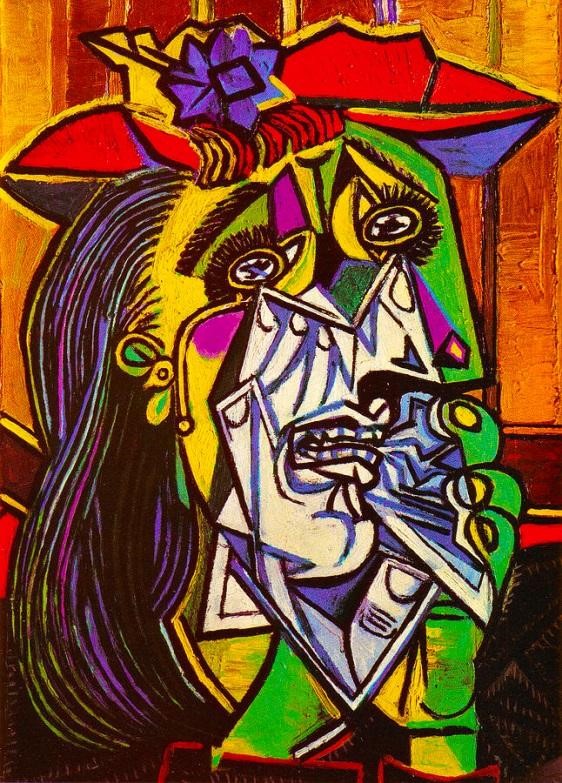
Pablo Picasso: A Life in Art
Pablo Picasso was one of the most influential artists of the 20th century. Born in Málaga, Spain, on 25 October 1881, he spent much of his adult life in France. Over a career spanning more than seven decades, he worked across painting, drawing, sculpture, printmaking, ceramics and other forms of visual art.
Early life and artistic beginnings
Picasso showed an exceptional talent for drawing from a young age. His father, José Ruiz Blasco, was an art teacher and helped guide his early training. Picasso studied in Barcelona and later moved to Paris, where he became part of the city’s lively artistic community.
His early work is often discussed in terms of two periods. The Blue Period, from around 1901 to 1904, features cool tones and subjects such as poverty, loneliness and hardship. In the Rose Period that followed, warmer colours and figures associated with the circus became more prominent.
Changing the language of art
Picasso’s work was rarely tied to one style. In 1907, he painted Les Demoiselles d’Avignon, a striking and unconventional work that helped pave the way for Cubism. Developed with the French artist Georges Braque, Cubism broke subjects into geometric forms and presented different viewpoints within a single image.
Picasso continued to experiment throughout his life, moving between styles and revisiting subjects in new ways. His work included portraits, still lifes, prints, sculptures and ceramics. Rather than following a straight path from one movement to another, he often returned to earlier ideas and transformed them.
Guernica and political themes
Among Picasso’s best-known works is Guernica, a large monochrome painting created in 1937 in response to the bombing of the Basque town of Guernica during the Spanish Civil War. The painting depicts suffering and destruction through fractured figures and stark contrasts. It has since become one of the most recognised anti-war artworks in the world.
Picasso also created works with personal and political meanings, though their interpretation can be complex. He joined the Communist Party in France after the Second World War and made several works connected with peace and political causes.
Legacy
Picasso died in Mougins, France, on 8 April 1973. His influence can be seen in the many artists who followed, particularly in the way he challenged established ideas about perspective, representation and artistic technique. His career also raises questions that continue to invite discussion, including how an artist’s personal life relates to the work they leave behind.
Today, Picasso’s art is held in museums and collections around the world. His importance lies not only in the number of works he produced, but also in his restless curiosity and willingness to reshape the possibilities of modern art.
Pablo Picasso: 8 Fascinating Facts About His Life and Art
- Picasso was born in Málaga, Spain, in 1881.
- He became one of the most influential artists of the 20th century.
- Explore his Blue Period, known for its sombre colours.
- Look for the warmer tones of his Rose Period.
- He helped develop Cubism with Georges Braque.
- His painting *Guernica* responds to the horrors of war.
- Picasso also made sculptures, ceramics and prints.
- Compare his works to see how dramatically his style changed.
Picasso was born in Málaga, Spain, in 1881.
Pablo Picasso was born in Málaga, Spain, on 25 October 1881. Growing up in a city with a rich artistic heritage, he showed an early aptitude for drawing, encouraged by his father, an art teacher. His Spanish roots remained an important part of his identity, even as he later made France his home and became one of the most influential artists of the 20th century.
He became one of the most influential artists of the 20th century.
Pablo Picasso became one of the most influential artists of the 20th century through his constant experimentation and bold rethinking of artistic traditions. A co-founder of Cubism, he explored a wide range of styles and worked across painting, sculpture, printmaking and ceramics. His innovative approach transformed modern art and continues to inspire artists around the world.
Explore his Blue Period, known for its sombre colours.
Explore Pablo Picasso’s Blue Period, which lasted from around 1901 to 1904. During these years, he favoured sombre shades of blue and blue-green to portray themes of poverty, loneliness and hardship. Look closely at how the muted palette and solitary figures create a quiet, reflective mood in works such as The Old Guitarist.
Look for the warmer tones of his Rose Period.
Look for the warmer tones of Picasso’s Rose Period, which followed his Blue Period around 1904. Soft pinks, reds and ochres bring warmth to many of these works, often featuring circus performers and other figures on the margins of society. Notice how the gentler palette changes the mood of the paintings, while still leaving room for reflection and melancholy.
He helped develop Cubism with Georges Braque.
Pablo Picasso helped develop Cubism alongside French artist Georges Braque in the early 20th century. The movement challenged traditional perspective by breaking subjects into geometric shapes and showing several viewpoints at once, changing how artists could represent the world.
His painting *Guernica* responds to the horrors of war.
Picasso’s Guernica responds to the horrors of war through stark monochrome imagery and fractured, anguished figures. Painted in 1937 after the bombing of the Basque town of Guernica during the Spanish Civil War, it conveys the suffering of civilians and the chaos of violence. The work has since become a powerful anti-war symbol, inviting viewers to reflect on the human cost of conflict.
Picasso also made sculptures, ceramics and prints.
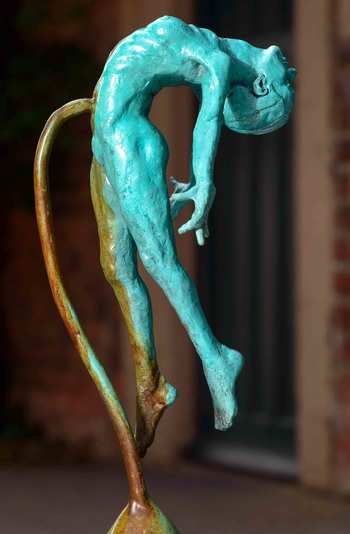
Picasso’s creativity extended well beyond painting. He made sculptures from materials such as bronze, wood and found objects, produced ceramics that combined practical forms with playful designs, and created prints using techniques including etching and lithography. Across each medium, he brought the same spirit of experimentation, reworking familiar forms and exploring new ways to express an idea.
Compare his works to see how dramatically his style changed.
Compare Picasso’s works from different periods to see just how dramatically his style changed. Place an early, realistic portrait beside a work from his Blue or Rose Period, then compare both with a Cubist painting such as Les Demoiselles d’Avignon. Notice how his use of colour, shape and perspective shifts over time, revealing an artist who continually experimented with new ways of seeing and representing the world.