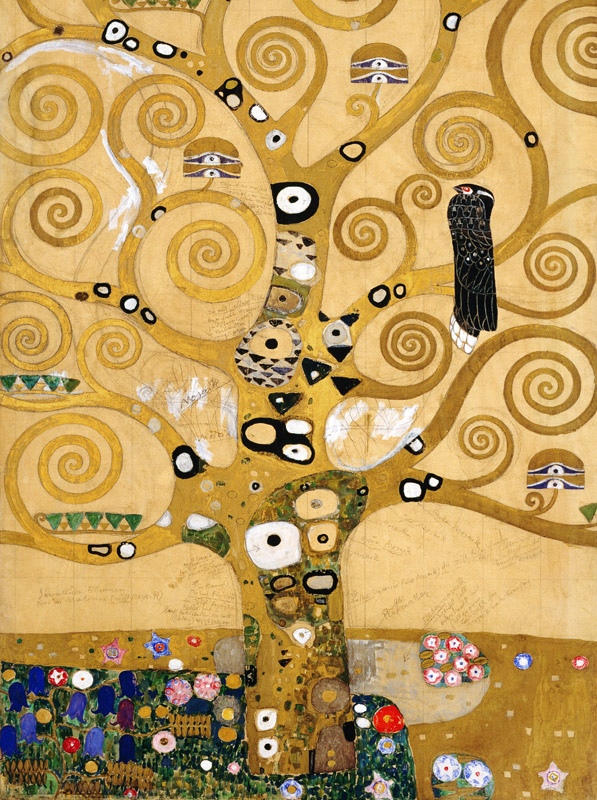
Gustav Klimt: The Artist Who Gilded Modern Art
Gustav Klimt (1862–1918) was an Austrian painter and a leading figure in the Vienna Secession, a movement that sought new ways of making and exhibiting art. Best known for richly patterned paintings and his use of gold, Klimt combined portraiture, symbolism and decorative design in a style that remains instantly recognisable.
Early life and artistic beginnings
Klimt was born in Baumgarten, near Vienna, into a family of modest means. He studied at the Vienna School of Arts and Crafts, where he trained in architectural decoration. Alongside his brother Ernst and fellow artist Franz Matsch, he later worked on commissions for public buildings, producing murals and other decorative pieces in a more traditional style.
Over time, Klimt moved away from academic conventions. His art became more personal and experimental, drawing on symbolism, Byzantine mosaics and the decorative arts. In 1897, he helped establish the Vienna Secession, an association of artists who wanted greater freedom from conservative institutions. Klimt served as its first president.
The Golden Phase
Klimt’s most celebrated works include The Kiss (1907–08), Portrait of Adele Bloch-Bauer I (1907) and Judith I (1901). These paintings are often associated with his “Golden Phase”, when he incorporated gold leaf and intricate ornament into his compositions.
In The Kiss, two figures embrace against a shimmering, patterned background. Their bodies are wrapped in richly decorated robes, while the surrounding gold seems to dissolve the distinction between the figures and their setting. The painting’s combination of intimacy, symbolism and surface pattern has made it one of the best-known images in modern art.
Gold was not simply a luxurious finish in Klimt’s work. It helped create a sense of distance from everyday life and gave his subjects an almost dreamlike presence. At the same time, his detailed patterns and expressive figures kept the paintings rooted in human emotion.
Portraits, landscapes and symbolism
Klimt was also a sought-after portraitist. His portraits of women from Vienna’s wealthy society are particularly notable for their confident poses, elaborate clothing and richly worked backgrounds. These paintings reveal his interest in identity and status, as well as his ability to make ornament an essential part of a portrait’s meaning.
He also painted landscapes, often during summer stays at Lake Attersee. These works are quieter than his portraits, with trees, gardens and lakes rendered in dense, carefully arranged patches of colour. Across both his landscapes and figure paintings, Klimt treated the picture surface as a space for pattern, rhythm and visual discovery.
Legacy
Klimt died in Vienna in 1918, but his influence continues to reach far beyond Austria. His work helped shape the development of modern art and remains a landmark of the Vienna Secession. Today, his paintings are admired for their technical skill, bold decoration and complex treatment of beauty, desire and human experience.
More than a century later, Klimt’s art still invites close looking. Its gold surfaces catch the eye, while its symbols, patterns and figures offer layers of meaning to explore.
Gustav Klimt: 8 Frequently Asked Questions About His Art, Life and Legacy
- Who owns the woman in gold painting now?
- Why was The Kiss controversial?
- How many illegitimate children did Klimt have?
- What is Klimt’s art style?
- Where is the most famous Klimt painting?
- Why was Klimt controversial?
- Was Klimt an impressionist?
- What is Gustav Klimt’s most famous piece?
Who owns the woman in gold painting now?
The painting known as Woman in Gold is Gustav Klimt’s Portrait of Adele Bloch-Bauer I. It is owned by the Neue Galerie New York, which acquired it in 2006 after it was returned to the heirs of Adele Bloch-Bauer following a lengthy restitution case. The portrait is on public display at the museum in New York.
Why was The Kiss controversial?
< p>The Kiss was considered daring because it portrayed an intimate, sensual embrace with an openness that challenged conservative ideas about sexuality and respectable art. Klimt’s flattened forms, lavish gold leaf and decorative patterns also departed from academic realism, prompting debate about whether the work was painting or ornament. However, it was not one of his most notorious works: unlike his earlier university ceiling paintings, which sparked fierce public criticism, The Kiss was well received when exhibited in Vienna in 1908 and was acquired by the state.
How many illegitimate children did Klimt have?
Gustav Klimt is believed to have fathered at least 14 children outside marriage, though the exact number is uncertain. He formally acknowledged only three sons, born to two different women.
What is Klimt’s art style?
Klimt’s art style blends Symbolism, Art Nouveau and decorative design. He is known for elegant, stylised figures, intricate patterns and rich colours, often combined with gold leaf, particularly during his “Golden Phase”. His paintings bring together portraiture and symbolism, balancing ornamental detail with themes such as love, beauty and human experience.
Where is the most famous Klimt painting?
Gustav Klimt’s most famous painting, The Kiss, is on permanent display at the Upper Belvedere in Vienna, Austria. The palace museum also holds an important collection of Klimt’s work, including several of his other paintings.
Why was Klimt controversial?
Gustav Klimt was controversial because his art challenged the conservative tastes and moral expectations of late 19th- and early 20th-century Vienna. His sensual subjects, frank depictions of the body and symbolic imagery were often judged indecent, while his highly decorative style broke with academic conventions. His university ceiling paintings, commissioned for the University of Vienna, drew particular criticism for their allegorical themes and were ultimately rejected by the university. These disputes helped make Klimt a leading figure in the Vienna Secession, which championed artistic freedom and new approaches to art.
Was Klimt an impressionist?
No, Gustav Klimt was not an Impressionist. Impressionism focused on capturing fleeting effects of light and colour, often through loose brushwork and scenes of modern life. Klimt is more closely associated with Symbolism and the Vienna Secession, combining expressive figures, allegorical themes and intricate decorative patterns. His best-known works, such as The Kiss, are noted for their ornamental detail and use of gold leaf rather than the characteristic approach of the Impressionists.
What is Gustav Klimt’s most famous piece?
Gustav Klimt’s most famous work is generally considered to be The Kiss (1907–08). The painting depicts an embracing couple surrounded by intricate patterns and shimmering gold leaf, hallmarks of Klimt’s celebrated Golden Phase. Its combination of intimacy, decorative detail and symbolism has made it one of the most recognisable works of modern art.