Vincent van Gogh: The Artist Who Changed How We See the World
Vincent van Gogh (1853–1890) was a Dutch painter whose vivid colours, expressive brushwork and intense approach to everyday subjects helped shape modern art. Although he received little recognition during his lifetime, his paintings are now among the best-known and most admired in the world.
An Unconventional Path to Art
Van Gogh was born in Zundert, in the Netherlands. He worked in several occupations before committing himself to art in his late twenties. His early paintings often focused on working people and rural life. The Potato Eaters (1885), for example, portrays a peasant family gathered around a meal, using dark tones to convey the hardship of their lives.
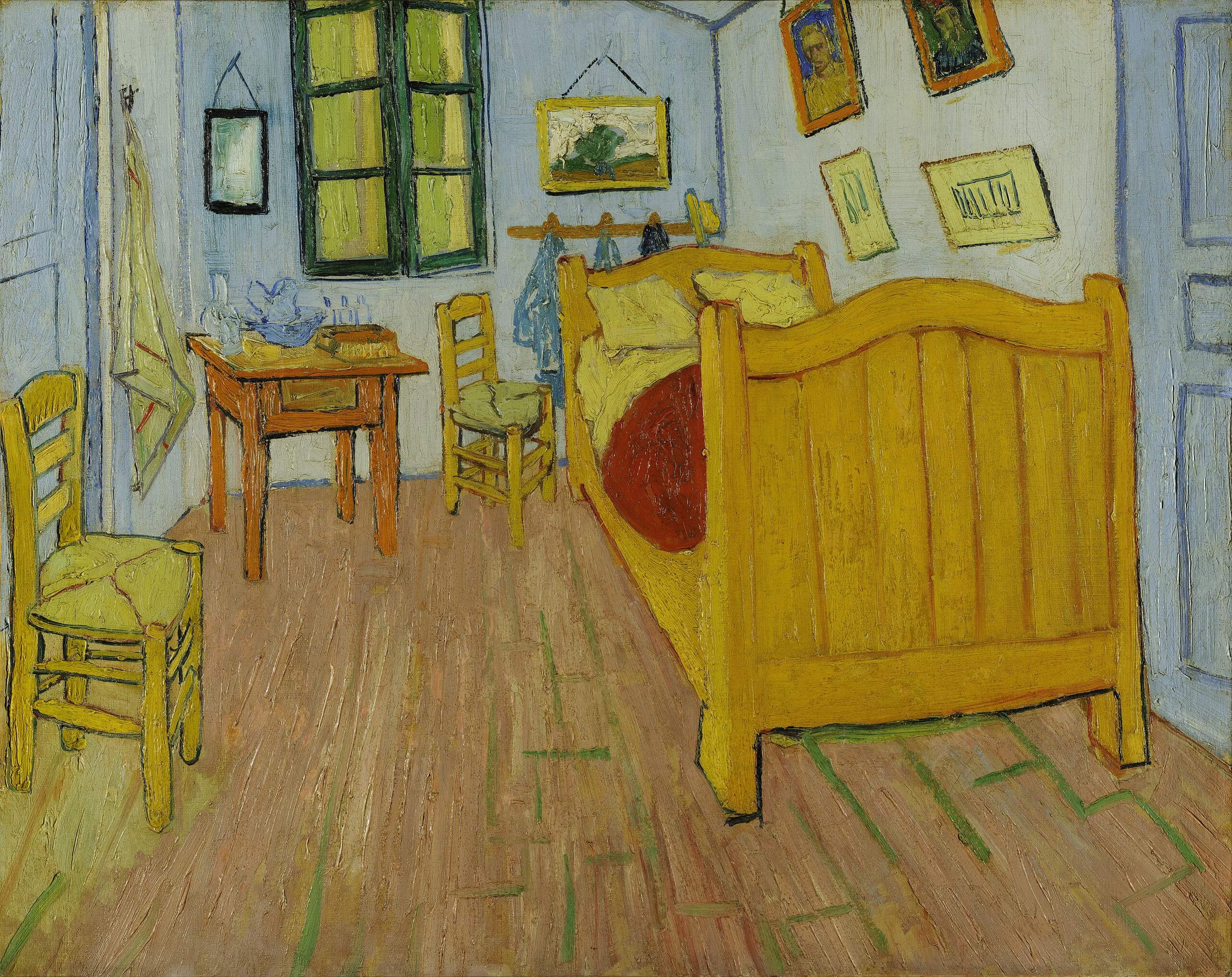
In 1886, Van Gogh moved to Paris, where he encountered the work of contemporary artists and became more adventurous with colour. Two years later, he settled in Arles in southern France. The region’s bright light and landscapes inspired some of his most celebrated paintings, including the Sunflowers series and The Bedroom.
A Distinctive Style
Van Gogh’s paintings are recognised for their bold colours and energetic brushstrokes. Rather than simply copying what he saw, he used shape, colour and movement to express how a subject felt to him. A night sky could swirl with motion; a vase of flowers could seem to glow; an ordinary chair could become a compelling portrait of a room and its occupant.
One of his best-known works, The Starry Night (1889), was painted while he was staying at an asylum in Saint-Rémy-de-Provence. Its rolling sky, bright stars and quiet village combine observation with imagination. The painting captures the emotional intensity that runs through much of his work.
Art, Letters and Personal Struggles
Van Gogh’s life included periods of serious mental ill health, which affected his wellbeing and his relationships. His friendship with fellow artist Paul Gauguin ended in 1888 following a crisis in Arles. Van Gogh later spent time receiving care at Saint-Rémy. His experiences should not be reduced to a romantic story of suffering: he was a dedicated artist who sought support and continued to work through difficult circumstances.
His brother Theo was a close confidant and provided practical and emotional support. The brothers’ letters, many of which survive, offer insight into Vincent’s ideas about art, his ambitions and his day-to-day life. Van Gogh produced an extraordinary body of work in a relatively short time, including hundreds of paintings and drawings.
A Lasting Influence
Van Gogh died in 1890, aged 37, in Auvers-sur-Oise, France. His reputation grew after his death, helped in part by Theo’s wife, Johanna van Gogh-Bonger, who worked to preserve and promote his paintings and letters.
Today, Van Gogh’s work continues to draw visitors to museums and inspire artists around the world. Its lasting power lies not only in its striking appearance, but also in the attention it gives to ordinary life: a field, a room, a face or a vase of flowers. Through colour and movement, Van Gogh made these familiar subjects feel newly alive.
7 Tips for Exploring Van Gogh’s Art
- Look closely at Van Gogh’s bold brushstrokes.
- Notice how he used colour to express emotion.
- Compare his early works with his later paintings.
- Look for swirling skies in works like *The Starry Night*.
- Explore his many paintings of sunflowers.
- Remember that he created over 2,000 artworks.
- Take your time with each painting.
Look closely at Van Gogh’s bold brushstrokes.
Look closely at Van Gogh’s bold brushstrokes: they do more than describe a subject—they give it energy and emotion. Follow the sweeping lines in a sky, the short dabs across a field or the thick marks shaping a vase of flowers. Notice how each stroke catches the light and guides your eye around the painting. Taking time to observe these details can reveal the movement and feeling behind Van Gogh’s distinctive style.
Notice how he used colour to express emotion.
Notice how Vincent van Gogh used colour to express emotion, rather than simply reproduce what he saw. His vivid yellows, deep blues and contrasting tones give scenes a distinctive mood, while energetic brushstrokes make the colours seem to move. In paintings such as The Starry Night, colour helps convey wonder and intensity, inviting you to experience the scene as much as to look at it.
Compare his early works with his later paintings.
Compare Van Gogh’s early works with his later paintings to see how dramatically his style developed. His early pieces, such as The Potato Eaters, often use dark, earthy colours and a more restrained palette to depict rural life. After moving to France, he adopted brighter colours, stronger contrasts and expressive, swirling brushstrokes, seen in works such as Sunflowers and The Starry Night. Looking at the two periods side by side reveals how his changing surroundings and artistic experiments shaped his distinctive style.
Look for swirling skies in works like *The Starry Night*.
Look for swirling skies in works such as The Starry Night, where Van Gogh’s energetic brushstrokes make the night seem alive with movement. Notice how the curling lines, glowing stars and rich blues create a sense of rhythm and emotion, turning a familiar landscape into something dreamlike.
Explore his many paintings of sunflowers.
Explore Vincent van Gogh’s many paintings of sunflowers to see how he transformed a familiar flower into a vivid study of colour, light and mood. Look closely at the changing shades of yellow, the energetic brushstrokes and the different arrangements across the series. Comparing the paintings reveals how Van Gogh returned to the same subject while giving each work its own character.
Remember that he created over 2,000 artworks.
Remember that Vincent van Gogh created more than 2,000 artworks, including paintings, drawings and sketches, during a career that lasted only about a decade. This remarkable output reflects his dedication to art and his constant experimentation with colour, composition and brushwork.
Take your time with each painting.
Take your time with each Van Gogh painting and let your eyes follow the brushstrokes, colours and shapes before moving on. Notice how he turns everyday subjects into something full of movement and feeling: the swirling sky in The Starry Night, for instance, or the vibrant blooms in his Sunflowers series. A slower look can reveal details and emotions that might be missed at first glance, making each painting a more rewarding experience.