James Ensor: The Artist Behind the Masks
James Ensor (1860–1949) was a Belgian painter and printmaker whose strange, vivid images helped reshape modern art. Best known for his masks, skeletons and carnival crowds, he combined humour with social criticism, creating works that could be both playful and unsettling.
Early life in Ostend
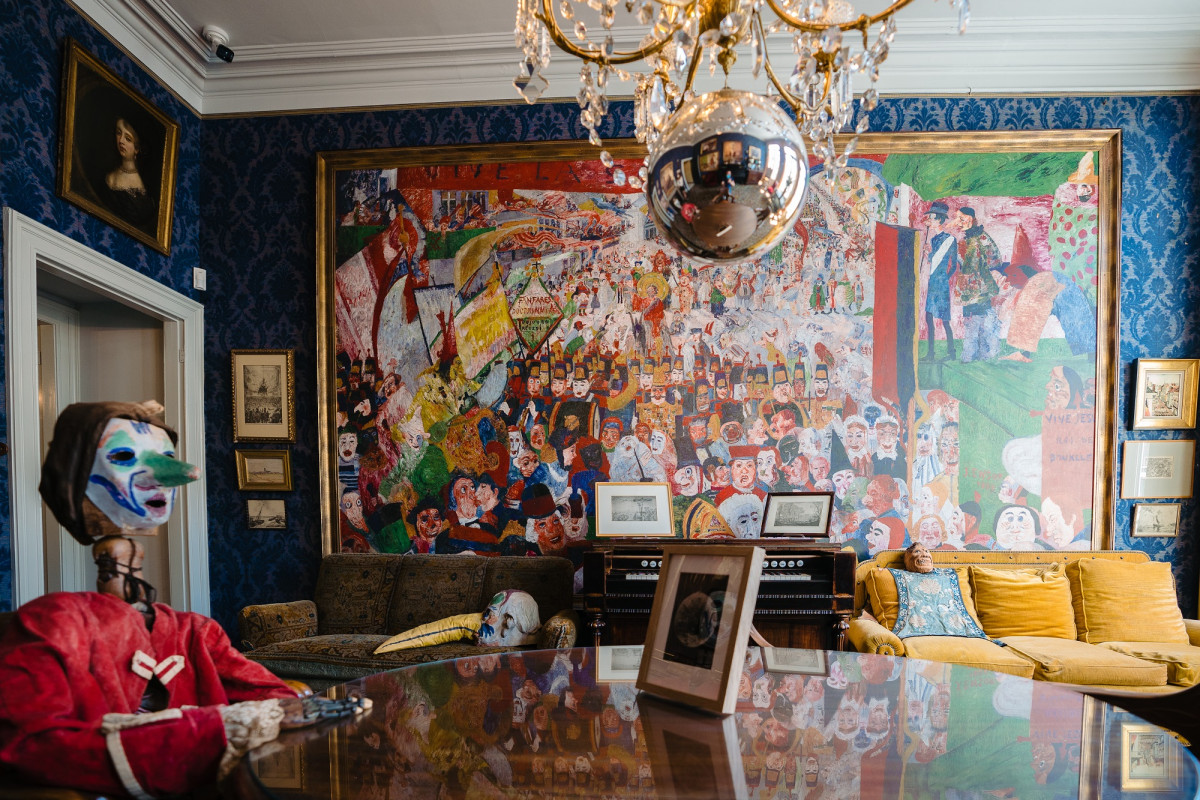
Ensor was born in Ostend, Belgium, on 13 April 1860. His family ran a souvenir shop selling, among other things, shells, curiosities and carnival masks. The shop’s unusual objects became a lasting source of inspiration, and masks would later appear throughout his art.
After studying at the Royal Academy of Fine Arts in Brussels from 1877 to 1880, Ensor returned to Ostend. He spent much of his life there, observing the town’s streets, seaside crowds and local traditions. His early paintings often depicted interiors and still lifes, but his style gradually grew more daring and imaginative.
Masks, crowds and social satire
From the 1880s onwards, masks became one of Ensor’s defining subjects. In his paintings, they can seem comic, grotesque or threatening. Their fixed expressions conceal the faces beneath them, suggesting the pretence and hypocrisy Ensor saw in society. He often placed them in crowded scenes, where their exaggerated features intensify the sense of disorder.
His best-known painting, Christ’s Entry into Brussels in 1889 (1888), shows a vast, unruly crowd filling the streets. Christ is almost lost among the mass of figures, banners and faces. The work is a religious image, a carnival scene and a pointed satire on public life all at once. Its scale and uncompromising vision made it especially challenging to contemporary audiences.
Ensor also returned frequently to skeletons, using them in scenes that mix dark comedy with reflections on death and human behaviour. In works such as The Skeletons Fighting over a Hanged Man, the macabre becomes a way to expose vanity, conflict and absurdity.
An independent artistic voice
In 1883, Ensor became a founding member of Les XX, an artists’ group formed in Brussels to exhibit work outside the restrictions of the official art establishment. The group supported new approaches and introduced Belgian audiences to a wide range of contemporary art. Ensor’s own work, however, remained highly individual: he blended detailed observation with fantasy, expressive colour and unsettling imagery.
Although his work was not always welcomed by critics, Ensor continued to develop it on his own terms. He was also an accomplished printmaker, producing etchings that allowed him to explore his crowded, imaginative scenes in fine detail.
A lasting influence
Ensor’s art anticipated aspects of Expressionism and Surrealism, though he cannot be neatly assigned to any one movement. His distorted faces, bold use of colour and dreamlike scenes offered later artists new ways to represent anxiety, social tension and the irrational.
James Ensor died in Ostend on 19 November 1949. Today, his work is recognised for its originality and its sharp, sometimes mischievous insight into human nature. Behind the masks and skeletons lies an artist who used the fantastic not to escape the world, but to look at it more closely.
James Ensor: Six Reasons to Celebrate a Belgian Master of Modern Art
- Pioneering Belgian artist
- Master of expressive colour
- Created memorable masked figures
- Blended humour with social critique
- Influenced modern art
- Celebrated for his originality
Six Drawbacks of James Ensor’s Art
- His grotesque imagery can feel unsettling.
- The crowded compositions may be hard to follow.
- His symbolism is not always clear.
- The macabre themes may not suit every taste.
- Some works can seem deliberately chaotic.
- His art may feel less accessible to casual viewers.
Pioneering Belgian artist
James Ensor was a pioneering Belgian artist whose bold, highly individual work helped shape the development of modern art. Rejecting conventional styles, he combined vivid colour, expressive brushwork and imaginative imagery to portray the carnival crowds, masks and skeletons of his native Ostend. His inventive approach influenced later movements, including Expressionism, and established him as one of Belgium’s most distinctive artists.
Master of expressive colour
James Ensor was a master of expressive colour, using bold, vivid hues to create atmosphere and intensify emotion. In paintings such as Christ’s Entry into Brussels in 1889, brilliant reds, yellows and blues bring the crowded scene to life while adding to its sense of spectacle and unease. Rather than simply depicting what he saw, Ensor used colour to shape the mood and meaning of his work, helping make his paintings striking, imaginative and unmistakably his own.
Created memorable masked figures
James Ensor created some of the most memorable masked figures in modern art. Inspired in part by the carnival masks sold in his family’s shop in Ostend, he painted faces that were comic, grotesque and unsettling. Their fixed expressions gave his crowded scenes a vivid sense of mystery, while also allowing him to satirise social pretence and human behaviour.
Blended humour with social critique
James Ensor blended humour with social critique, using masks, grotesque figures and carnival scenes to expose the pretence and hypocrisy he saw in society. His images can be funny and absurd, yet their laughter often has a sharper edge: beneath the lively colours and comic expressions lie questions about power, conformity and human behaviour. This mix of wit and criticism gives his work both its distinctive character and its lasting relevance.
Influenced modern art
James Ensor helped shape modern art through his bold colours, expressive brushwork and unconventional, often dreamlike imagery. His masks, distorted faces and crowded scenes challenged traditional ideas of how art should represent the world, anticipating elements of Expressionism and Surrealism. By blending satire, fantasy and social observation, Ensor inspired later artists to explore emotion and imagination in new and daring ways.
Celebrated for his originality
James Ensor is celebrated for his originality and his strikingly individual vision. Blending vivid colour, imaginative detail and unexpected subjects such as masks and skeletons, he created works that defied artistic conventions and challenged viewers to see the world in a new way. His inventive approach helped shape modern art and continues to inspire artists today.
His grotesque imagery can feel unsettling.
One possible drawback of James Ensor’s work is that its grotesque imagery can feel unsettling. His masks, distorted faces and skeletons create scenes that are often crowded and unnerving, which may make them difficult to enjoy, particularly for viewers drawn to calmer or more naturalistic art. At the same time, this discomfort is deliberate: it helps Ensor confront audiences with the anxieties and absurdities of human life.
The crowded compositions may be hard to follow.
Ensor’s crowded compositions can be difficult to follow, with masks, figures and intricate details competing for attention. The sheer number of elements may make it challenging to identify a clear focal point or understand the scene at first glance, so viewers may need time to take in how the different parts relate to one another.
His symbolism is not always clear.
One challenge when viewing James Ensor’s work is that its symbolism is not always clear. Masks, skeletons and crowded scenes can suggest satire, fear, vanity or social criticism, but their meanings are often deliberately ambiguous. This openness can make the paintings intriguing, though it may also leave viewers unsure how to interpret the images or what Ensor intended.
The macabre themes may not suit every taste.
James Ensor’s frequent use of skeletons, masks and grotesque figures gives his work a distinctive, unsettling edge, but its macabre themes may not suit every taste. Viewers looking for gentle or uplifting imagery may find some of his paintings disturbing, while the dark humour and crowded scenes can feel overwhelming.
Some works can seem deliberately chaotic.
Some of James Ensor’s works can seem deliberately chaotic, with crowded scenes, distorted figures and clashing details competing for attention. This disorder can make the subject difficult to follow and may leave viewers unsure where to focus. While the confusion often supports his satire and unsettling vision, it can also make the paintings feel overwhelming or inaccessible, particularly to those who prefer a clearer composition.
His art may feel less accessible to casual viewers.
James Ensor’s art can feel less accessible to casual viewers because its crowded scenes, grotesque masks and symbolic details are not always easy to interpret at first glance. Works such as Christ’s Entry into Brussels in 1889 may seem chaotic or unsettling before their satire and social commentary become clear. Taking time to explore the imagery and historical context can make the paintings more rewarding, but their challenging style may not appeal to everyone.