Amedeo Modigliani: The Artist Behind the Elongated Portraits
Amedeo Modigliani (1884–1920) was an Italian painter and sculptor whose distinctive portraits and nudes became among the most recognisable images of modern art. His subjects often have elongated faces, slender necks and simplified features. Yet beneath this striking style lies a deeply personal body of work shaped by his travels, artistic influences and life in Paris.
Early life and move to Paris
Modigliani was born in Livorno, Italy, into a Jewish family. He studied art in several Italian cities, including Florence and Venice, before moving to Paris in 1906. The city was then a meeting place for artists from across Europe, and Modigliani settled in Montparnasse, where he encountered a lively, experimental art scene.
He formed connections with other artists and writers, while drawing inspiration from a wide range of sources. These included the work of Paul Cézanne and the forms of African and other non-European sculpture, which were attracting the attention of many modern artists at the time. Modigliani absorbed these influences without simply copying them, developing a style that was recognisably his own.
A distinctive artistic style
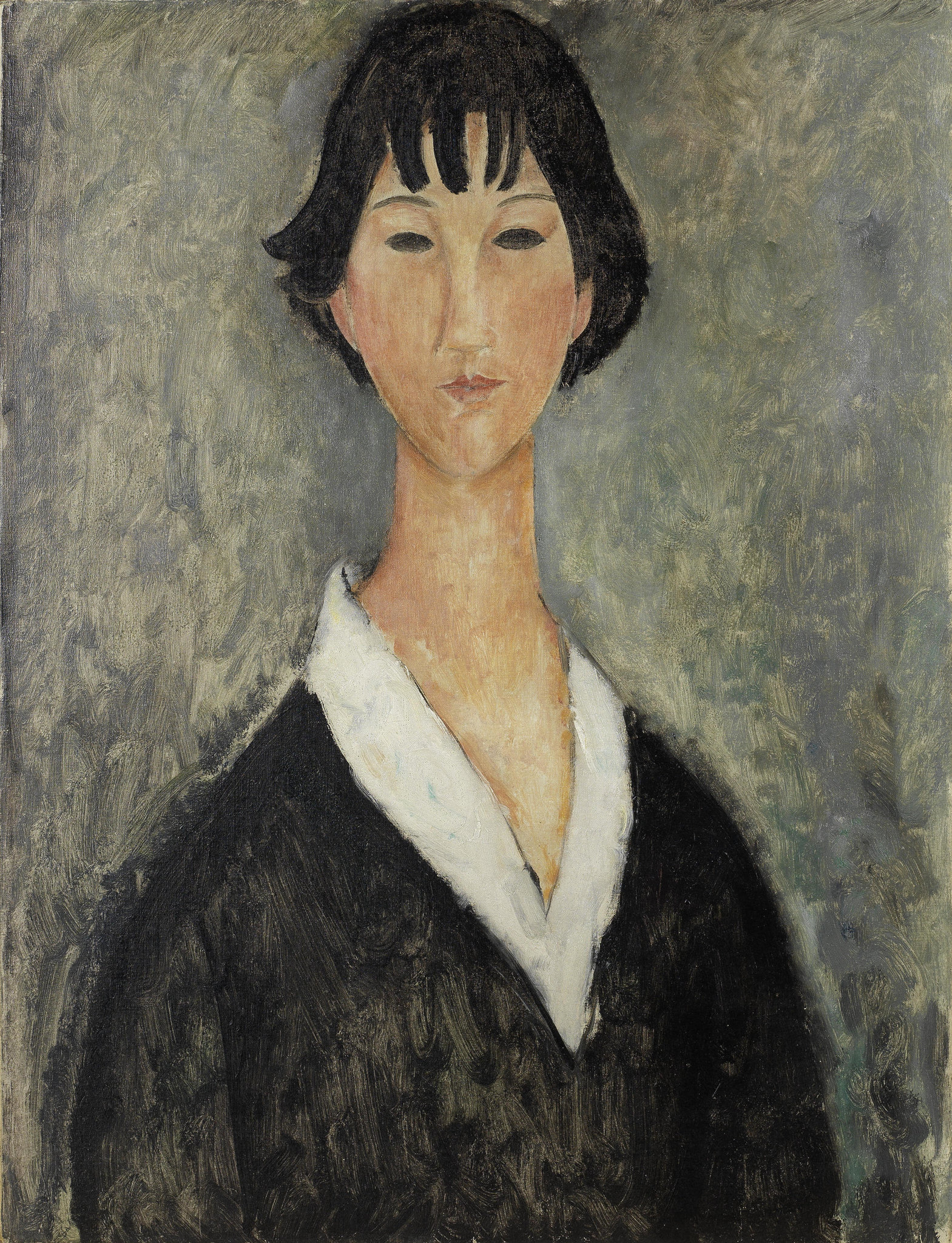
Modigliani is best known for his portraits. He often stretched and simplified the human form, creating elegant, carefully balanced compositions. His sitters may have long noses, small mouths and almond-shaped eyes. Some eyes are left without clearly defined pupils; others are painted with colour and detail. The result is not a fixed formula, but a range of portraits that combine stylisation with a strong sense of individual character.
He painted friends, fellow artists, writers and other people in his circle. Rather than aiming for a strictly realistic likeness, Modigliani used line, colour and shape to suggest the sitter’s presence and mood. His figures can appear reserved or contemplative, while remaining warm and human.
Sculpture and painting
Sculpture was also central to Modigliani’s artistic ambitions. In the early 1910s, he made a group of carved stone heads inspired by his study of ancient and non-European art. Their simplified forms and elongated features share clear links with his later paintings. Health problems and the practical demands of working with stone eventually led him to concentrate more fully on painting.
The nudes and public attention
In 1917, Modigliani held a solo exhibition at the Berthe Weill gallery in Paris. His paintings of nude women attracted public attention, and the exhibition was closed by police on grounds of indecency. Today, these works are valued for their expressive treatment of the body and their departure from idealised academic conventions.
Final years and legacy
Modigliani’s health was fragile, and he died in Paris in January 1920, aged 35, from tuberculous meningitis. His partner, the artist Jeanne Hébuterne, died by suicide the following day. Their lives and deaths have often been told as part of the mythology surrounding Modigliani, but his lasting reputation rests above all on the strength and individuality of his art.
Modigliani’s paintings and sculptures are now held in major collections around the world. His work continues to appeal to viewers for its clarity of form, quiet intensity and distinctive vision. By transforming the human figure into something both stylised and deeply expressive, he created an artistic language that remains unmistakable.
Five Reasons Modigliani Remains an Icon of Modern Art
- Created a distinctive and instantly recognisable style.
- Captured the individuality of his sitters.
- Combined influences from diverse artistic traditions.
- Produced striking paintings and sculptures.
- Left a lasting mark on modern art.
7 Criticisms and Limitations of Modigliani’s Art and Legacy
- His portraits can feel stylistically repetitive.
- Elongated features may seem formulaic.
- Some figures lack anatomical realism.
- His work offers limited variation in perspective.
- The simplified forms may not appeal to everyone.
- His short career left a relatively small body of work.
- His fame is sometimes overshadowed by romanticised stories about his life.
Created a distinctive and instantly recognisable style.
Modigliani created a distinctive, instantly recognisable style through his elongated faces, graceful necks and simplified features. Drawing on diverse artistic influences, he transformed the human figure into elegant, expressive forms that captured the character of his sitters while remaining unmistakably his own.
Captured the individuality of his sitters.
Modigliani’s portraits are celebrated for capturing the individuality of his sitters, even when their features are simplified or elongated. Through subtle differences in expression, posture, colour and line, he conveyed a sense of each person’s character and presence. His portraits go beyond physical likeness, inviting viewers to connect with the distinct personality of the person depicted.
Combined influences from diverse artistic traditions.
One of Modigliani’s strengths was his ability to draw on diverse artistic traditions and shape them into a distinctive personal style. Influenced by Italian Renaissance art, ancient sculpture and African and other non-European forms, he brought together elongated proportions, simplified features and graceful lines in his paintings and sculptures. Rather than simply imitate these sources, he transformed them into expressive portraits that feel both modern and timeless.
Produced striking paintings and sculptures.
Modigliani produced striking paintings and sculptures that are instantly recognisable for their elegant, elongated forms and expressive simplicity. His portraits combine bold lines and carefully balanced shapes to suggest the character and presence of his subjects, while his carved stone heads reveal a distinctive approach to form and proportion. Together, these works show his ability to transform familiar figures into images that feel both timeless and original.
Left a lasting mark on modern art.
Modigliani left a lasting mark on modern art through his distinctive portraits and sculptures, which combined simplified forms with expressive character. His elongated faces, graceful lines and thoughtful use of colour created a style that was instantly recognisable and continues to influence artists and captivate audiences around the world.
His portraits can feel stylistically repetitive.
One criticism of Modigliani’s work is that his portraits can feel stylistically repetitive. The elongated faces, slender necks and simplified features that make his paintings instantly recognisable also appear so often that some sitters seem to blend together. While subtle differences in expression, colour and composition reward closer attention, viewers may still find that the recurring approach limits the sense of variety across his portraits.
Elongated features may seem formulaic.
Modigliani’s distinctive elongated faces, necks and limbs are central to his style, but their repeated use can make some works seem formulaic. When similar proportions and simplified features appear across many portraits, individual sitters may seem less distinct, and the approach can feel more like a recognisable device than a fresh response to each subject. This consistency is part of what makes his work instantly identifiable, though it may also limit the sense of variety for some viewers.
Some figures lack anatomical realism.
Some figures in Modigliani’s work lack anatomical realism, with elongated necks, narrow shoulders and simplified facial features that depart from natural proportions. While these distortions contribute to his distinctive style, they can make the figures seem less lifelike and may not appeal to viewers who value accurate, realistic representation.
His work offers limited variation in perspective.
One criticism of Modigliani’s work is its limited variation in perspective. Many portraits present the sitter from a similar, forward-facing viewpoint, with little sense of movement or changing spatial depth. This consistency contributes to the distinctive elegance of his style, but it can also make some compositions feel repetitive and less exploratory than those of artists who experimented more widely with angle and perspective.
The simplified forms may not appeal to everyone.
Modigliani’s simplified forms are central to his distinctive style, but they may not appeal to everyone. Viewers who prefer realistic detail or lifelike proportions might find his elongated faces, slender figures and pared-back features less engaging. For some, this stylisation can also make the portraits feel distant, even though others value their elegance and expressive quality.
His short career left a relatively small body of work.
Modigliani’s career was cut short by his death at just 35, leaving a relatively small body of work compared with many other artists. As a result, there are fewer paintings and sculptures to trace the development of his style, and opportunities to see his work in person can be limited. His distinctive portraits and sculptures are also highly sought after, which can make original works difficult for many collectors and institutions to acquire.
His fame is sometimes overshadowed by romanticised stories about his life.
Modigliani’s fame is sometimes overshadowed by romanticised stories about his turbulent life, poverty and early death. These accounts can turn him into a tragic legend, drawing attention away from the skill, experimentation and individuality of his paintings and sculptures. While his biography provides important context, it is worth approaching it critically and giving his artistic achievements equal consideration.