The Venus de Milo: A Timeless Masterpiece of Ancient Greek Sculpture
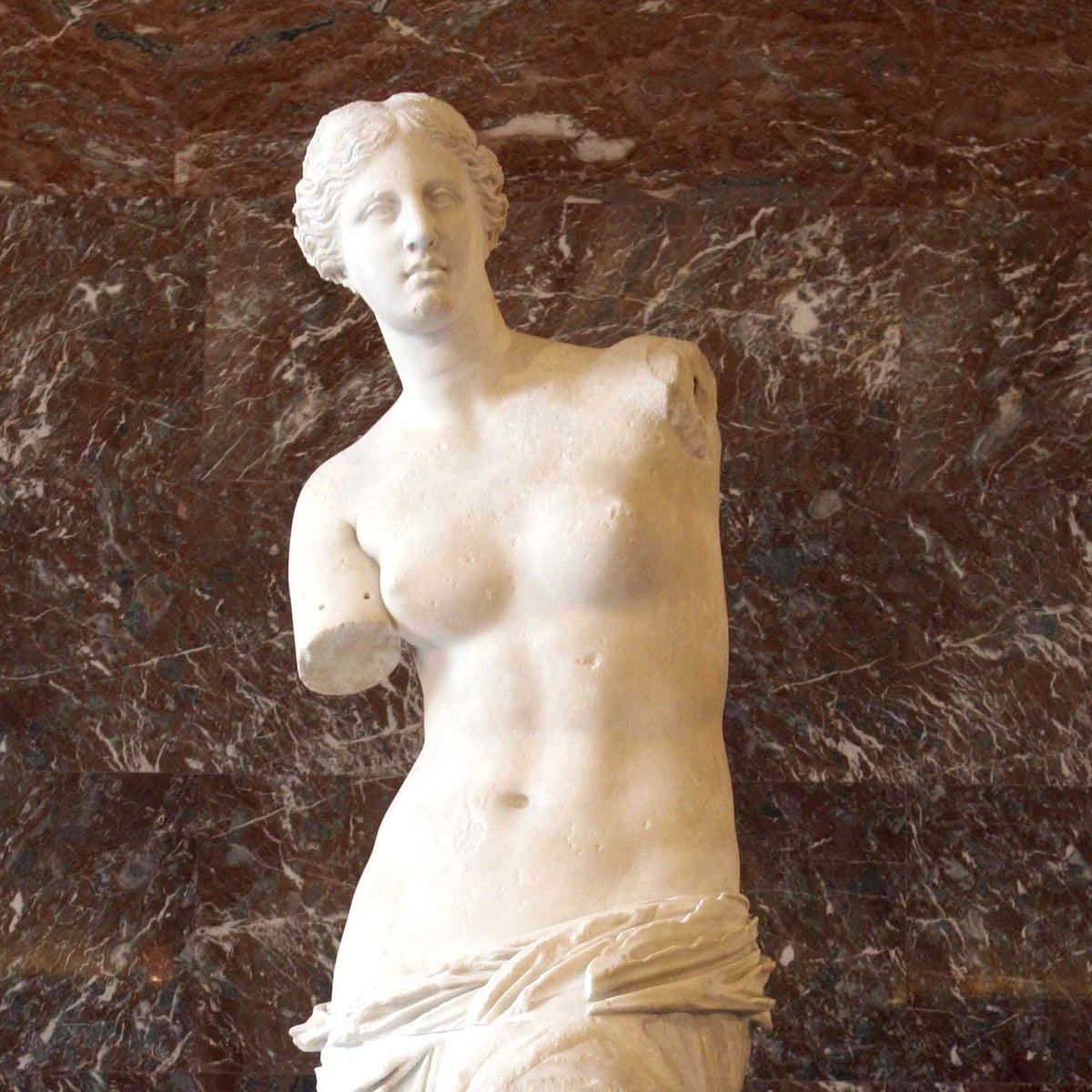
The Venus de Milo is one of the best-known sculptures from ancient Greece. Celebrated for its graceful pose, finely carved drapery and missing arms, the marble statue has fascinated visitors and artists for generations. It is displayed at the Louvre Museum in Paris and remains an enduring symbol of classical beauty.
Who does the statue represent?
The sculpture is generally identified as Aphrodite, the ancient Greek goddess of love and beauty, known to the Romans as Venus. The figure’s calm expression and idealised features reflect artistic traditions that associated the goddess with beauty and grace. However, the statue’s original pose and the objects she may have held are unknown.
Discovery and history
The Venus de Milo was discovered in 1820 on the Greek island of Milos, known as Melos in antiquity. It was found in several pieces by a local farmer, Yorgos Kentrotas, and came to the attention of French naval officer Olivier Voutier. The statue was later acquired for France and entered the Louvre’s collection in 1821.
Its familiar name comes from the island where it was found. Although the sculpture is now displayed without arms, they were already missing when it was discovered. The circumstances of its original appearance—and whether any fragments belonged to it—have been the subject of continued discussion.
How old is the Venus de Milo?
Art historians generally date the statue to the Hellenistic period, most often placing it between about 150 and 125 BC. Its maker is not known with certainty. An inscription once associated with the sculpture has led to a proposed attribution to Alexandros of Antioch, but the evidence is incomplete, so the attribution remains uncertain.
Style and craftsmanship
Carved from marble, the statue stands just over two metres tall. Its composition balances the figure’s gently turned body with the sweeping folds of her garment. The drapery appears to slip from her hips, creating a contrast between the exposed torso and the richly worked fabric. This combination of idealised form and careful detail is characteristic of the sophistication associated with Hellenistic sculpture.
The missing arms have also become part of the statue’s appeal. Without them, viewers are left to imagine the figure’s original gesture and the story it may have told. Rather than diminishing the work, this sense of mystery has helped sustain interest in it.
A lasting legacy
Since its arrival at the Louvre, the Venus de Milo has become one of the museum’s most recognised works. Its image has appeared in books, exhibitions and popular culture, while its influence can be seen in later interpretations of the classical ideal. The statue’s fame rests not only on its beauty, but also on the questions it leaves unanswered.
More than two thousand years after it was created, the Venus de Milo continues to invite close looking and fresh interpretation. Its poise, craftsmanship and enduring mystery make it a remarkable survivor from the ancient world.
Venus de Milo: 7 Frequently Asked Questions
- Who sculpted the Venus de Milo statue?
- Where is the original Venus de Milo statue?
- What is the Venus de Milo statue missing?
- How much is the Venus de Milo worth?
- Where is the original Venus de Milo?
- Why is Venus of Milo so famous?
- What does the Venus de Milo statue represent?
Who sculpted the Venus de Milo statue?
The sculptor of the Venus de Milo is not known with certainty. It is often attributed to Alexandros of Antioch, based on an inscription once associated with the statue, but the evidence is incomplete and the attribution remains disputed. The work is generally dated to the Hellenistic period, around 150–125 BC.
Where is the original Venus de Milo statue?
The original Venus de Milo statue is on display at the Louvre Museum in Paris, France. Visitors can see the ancient Greek marble sculpture in the museum’s Department of Greek, Etruscan and Roman Antiquities.
What is the Venus de Milo statue missing?
The Venus de Milo is missing both arms, which were already absent when the statue was discovered on the Greek island of Milos in 1820. As no surviving evidence confirms their original position or what the figure may have been holding, the statue’s pose and gesture remain a mystery.
How much is the Venus de Milo worth?
The Venus de Milo has no official sale price: it belongs to the French state and is held in the collection of the Louvre Museum, so it is not available to buy. As one of the world’s most famous ancient sculptures, its cultural and historical significance is considered beyond ordinary commercial valuation. Any figure quoted for its worth would be speculative rather than an established market price.
Where is the original Venus de Milo?
The original Venus de Milo is housed in the Louvre Museum in Paris, France. It is displayed in the museum’s Department of Greek, Etruscan and Roman Antiquities, where visitors can see the ancient marble sculpture in person.
Why is Venus of Milo so famous?
The Venus de Milo is famous for its elegant pose, finely carved marble and status as one of the best-known surviving sculptures from ancient Greece. Discovered on the Greek island of Milos in 1820, it has been displayed at the Louvre in Paris since the 19th century. Its missing arms add an enduring sense of mystery, inviting people to wonder how the statue originally looked and what it may have held.
What does the Venus de Milo statue represent?
The Venus de Milo is generally believed to represent Aphrodite, the ancient Greek goddess of love and beauty, known to the Romans as Venus. Its graceful pose and idealised features reflect classical ideas of beauty, though the statue’s missing arms leave its original gesture—and any objects it may have held—open to interpretation.