Dada: Art, Absurdity and a Challenge to Convention
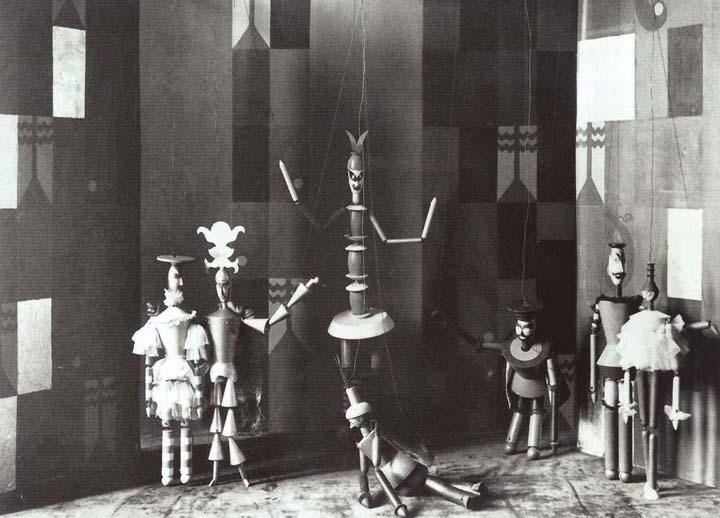
Dada was an international avant-garde movement that questioned the meaning of art, the authority of tradition and the logic of a society that had descended into war. Emerging during the First World War, it embraced nonsense, chance, performance and provocation. Rather than offering a single style or set of rules, Dada brought together artists and writers who sought new ways to respond to a world they regarded as deeply irrational.
Origins in Zurich
Dada took shape in Zurich, Switzerland, in 1916. The city had become a refuge for artists and intellectuals escaping the war. At the Cabaret Voltaire, founded by Hugo Ball and Emmy Hennings, performers presented poetry, music and experimental events that challenged conventional ideas of culture. Among the people associated with Zurich Dada were Tristan Tzara, Hans Arp and Richard Huelsenbeck.
The name “Dada” is often said to have been chosen at random, reflecting the movement’s taste for chance and playful ambiguity. The group never settled on one definitive explanation. That uncertainty suited a movement that resisted tidy definitions.
Making art out of the unexpected
Dada artists used surprising materials and methods, including collage, photomontage, assemblage, found objects and improvised performance. They combined images and words in ways that disrupted familiar meanings. Some works were deliberately provocative or absurd; others explored how photographs, printed matter and everyday objects could be transformed by their context.
Marcel Duchamp’s “readymades” became especially influential. In works such as Fountain (1917), Duchamp presented an ordinary manufactured object as art, prompting questions about authorship, artistic skill and the role of institutions in deciding what counts as art. Duchamp was associated with the broader avant-garde, including the New York Dada circle, though he did not simply follow the Zurich group’s programme.
A movement with many voices
Dada developed differently in different places. In Berlin, artists such as Hannah Höch, John Heartfield, George Grosz and Raoul Hausmann used photomontage and satire to confront politics and social power. Höch’s cut-and-pasted images challenged assumptions about gender and identity, while Heartfield’s work became known for its direct anti-fascist message.
In Paris, Dada events and publications helped shape the next generation of experimental art and literature. The movement also spread to cities including Cologne and New York. Its participants did not always agree, and those disagreements were part of its history. By the early 1920s, some leading figures had moved towards Surrealism, which developed in part from Dada’s experiments.
Dada’s lasting influence
Dada’s importance lies not only in the objects it produced but also in the questions it raised. Can anything become art? How do images shape political beliefs? Can chance and play reveal something that reason overlooks? These questions continue to resonate in conceptual art, performance, collage and other forms of creative practice.
More than a century after its emergence, Dada remains a reminder that art can challenge expectations rather than simply meet them. Its irreverence and experimentation offered a radical response to its time—and helped broaden the possibilities of what art could be.
Embrace the Absurd: 8 Tips for Exploring Dada
- Embrace the absurd.
- Break the rules of art.
- Make a collage from found images.
- Use chance to guide your work.
- Pair unrelated words or objects.
- Challenge ideas of beauty and meaning.
- Try sound poetry or performance.
- Remember
Embrace the absurd.
Embrace the absurd: Dada thrives on surprise, contradiction and playful nonsense. Bring together unexpected images, words or everyday objects, and let chance guide the result rather than aiming for a neat or logical outcome. By disrupting familiar meanings, absurdity can question convention and reveal fresh ways of seeing the world.
Break the rules of art.
Dada’s tip to “break the rules of art” is an invitation to question who sets those rules and what art can be. Dada artists rejected traditional ideas of beauty, skill and artistic subject matter, using chance, collage, performance and everyday objects to create unexpected work. Their experiments show that breaking conventions is not simply about being shocking: it can open up fresh ways to express ideas, challenge authority and help people see familiar things differently.
Make a collage from found images.
Make a collage from found images to explore Dada’s playful, chance-driven approach to art. Cut pictures and words from old magazines, newspapers or discarded prints, then arrange and layer them in unexpected ways. Try combining unrelated subjects, changing their scale or adding a surprising caption. Rather than planning every detail, let the materials guide you—the result can question familiar meanings and turn everyday images into something new.
Use chance to guide your work.
Let chance play a part in your creative process. Cut up words or images, rearrange them at random, or choose materials without planning how they will fit together. This Dada-inspired approach can lead to surprising combinations and fresh ideas. Rather than correcting every accident, stay open to what it reveals and let the unexpected guide your work.
Pair unrelated words or objects.
Pairing unrelated words or objects is a simple way to explore Dada’s playful, unpredictable spirit. Place two things together that do not seem to belong—such as a teacup and a thunderstorm, or a key and a loaf of bread—and see what new meaning emerges. The contrast can create humour, surprise or a curious image that challenges ordinary ways of thinking. There is no need to explain the pairing straight away; let chance guide the choice and allow the audience to make their own connections.
Challenge ideas of beauty and meaning.
Dada challenges conventional ideas of beauty and meaning by turning away from polished forms and familiar symbols. Its artists embraced the absurd, the accidental and the everyday, inviting people to question why certain objects or images are considered valuable or beautiful. A collage, performance or ordinary object could become art not because it followed established rules, but because it prompted fresh thought and unsettled expectations.
Try sound poetry or performance.
Try sound poetry or performance to explore Dada’s playful, experimental spirit. Forget the usual rules of rhyme and meaning: use unexpected sounds, invented words, repetition and pauses, or combine spoken phrases with gestures and movement. You could perform alone or collaborate with others, letting rhythm and chance shape the result. The aim is not to make everything logical, but to surprise your audience and challenge what poetry or performance can be.
Remember
Remember that Dada was more than an art style: it was an international movement that challenged convention, questioned what art could be and responded to the irrationality of war with experimentation, absurdity and chance. Its artists used unexpected materials and playful ideas to encourage people to look at familiar things in new ways.