Bob Ross: The Painter Who Made Art Feel Within Reach
With his gentle voice, distinctive hairstyle and reassuring words, Bob Ross became one of television’s most recognisable art teachers. Through his long-running programme The Joy of Painting, he introduced millions of viewers to landscape painting and encouraged them to pick up a brush, whatever their level of experience.
From the Air Force to the canvas
Robert Norman Ross was born in Daytona Beach, Florida, in 1942. He served for 20 years in the United States Air Force, including a posting in Alaska. The region’s mountains, forests and lakes later became a lasting source of inspiration for his paintings.
While in the Air Force, Ross developed his interest in painting and learned the wet-on-wet technique, in which fresh paint is applied over wet layers. The method allows artists to blend colours and create a finished landscape relatively quickly. Ross went on to teach painting, drawing on techniques he had learned from other artists, including television instructor Bill Alexander.
The Joy of Painting
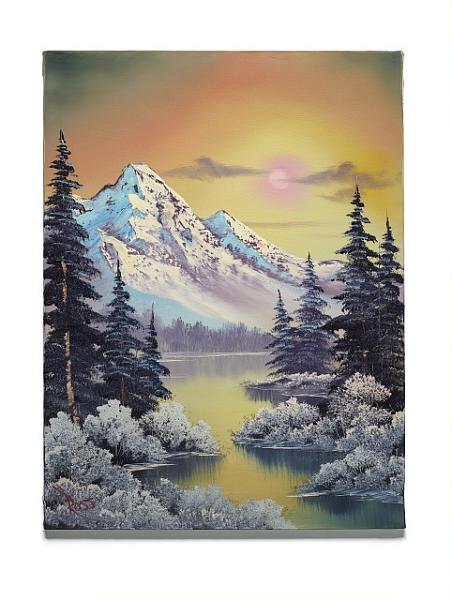
First broadcast in 1983, The Joy of Painting ran for 31 series. In each episode, Ross created a landscape while explaining his materials and methods in a calm, accessible style. He often painted mountains, trees, clouds and lakes, bringing the scene together with broad brushstrokes and a palette knife.
His encouraging catchphrases became part of the programme’s appeal. Rather than presenting mistakes as failures, he treated them as opportunities for something new to appear on the canvas. That relaxed approach helped make painting feel less intimidating and more like an enjoyable experiment.
A lasting influence
Ross died in 1995, aged 52, after living with lymphoma. His work and teaching have continued to reach new audiences through television repeats, books and online videos. For many viewers, The Joy of Painting remains both an introduction to landscape art and a peaceful programme to return to.
Bob Ross’s legacy is not only the collection of paintings he left behind. It is also the invitation at the heart of his teaching: to be curious, to keep practising and to find pleasure in making something with your own hands.
5 Reasons Bob Ross Made Painting Welcoming, Calming and Inspiring
- Made painting feel accessible to beginners
- Taught a simple wet-on-wet technique
- Created calming, welcoming television
- Encouraged creativity without fear of mistakes
- Inspired generations of artists
Bob Ross: Repetitive Style, Technique Limitations and a Leisurely Pace
- His painting style can feel repetitive.
- The wet-on-wet method is not suited to every subject.
- His relaxed pace may not appeal to every viewer.
Made painting feel accessible to beginners
Bob Ross made painting feel accessible to beginners by explaining each step in a calm, clear and encouraging way. On The Joy of Painting, he showed viewers how simple techniques could bring a landscape to life, while reminding them that mistakes could become part of the picture. His relaxed teaching style helped people feel that they did not need formal training or expensive materials to enjoy painting and give it a try.
Taught a simple wet-on-wet technique
Bob Ross made the wet-on-wet painting technique easy to understand, showing viewers how to apply fresh oil paint over still-wet layers to create landscapes in a single sitting. His clear, step-by-step demonstrations helped beginners blend colours, shape clouds and mountains, and add details without needing years of experience.
Created calming, welcoming television
Bob Ross created calming, welcoming television by teaching painting in a gentle, unhurried style that made viewers feel at ease. His warm manner, reassuring words and lack of pressure helped make art seem accessible to everyone, whether they had painted before or were simply watching to relax.
Encouraged creativity without fear of mistakes
Bob Ross encouraged people to be creative without worrying about making mistakes. In his painting lessons, he treated unexpected marks as opportunities to try something new, often reminding viewers that there were no mistakes—only “happy accidents”. His relaxed, reassuring approach helped beginners feel more confident, experiment freely and enjoy the process of creating.
Inspired generations of artists
Bob Ross inspired generations of artists by making painting feel welcoming and achievable. Through his calm teaching style and practical demonstrations, he encouraged viewers to experiment, learn from mistakes and discover their own creativity. His influence continues to be felt by artists of all ages, many of whom first picked up a brush after watching The Joy of Painting.
His painting style can feel repetitive.
One criticism of Bob Ross’s work is that his painting style can feel repetitive. Many episodes of The Joy of Painting feature familiar landscapes, such as mountains, lakes and evergreen trees, created with similar techniques and compositions. While this consistency is part of the programme’s comforting appeal, viewers looking for greater variety or more experimental approaches may find the paintings predictable.
The wet-on-wet method is not suited to every subject.
The wet-on-wet method is ideal for creating quick, atmospheric landscapes, but it is not suited to every subject. Because fresh paint is layered over wet paint, colours can blend or become muddy, making it harder to achieve crisp edges, fine details or precise shapes. This can limit its usefulness for subjects such as detailed portraits, intricate still lifes or work that needs a highly controlled finish.
His relaxed pace may not appeal to every viewer.
Bob Ross’s calm, unhurried teaching style is a big part of his appeal, but it may not suit every viewer. Those looking for fast-paced instruction, more technical detail or a wider variety of subjects might find the gentle pace slow and repetitive.