Claude Monet: The Artist Who Captured Light
Claude Monet (1840–1926) was a French painter and one of the leading figures of Impressionism. Best known for his luminous landscapes and vivid studies of water, weather and changing light, Monet helped transform the direction of modern art.
Early life and artistic beginnings
Born in Paris, Monet grew up in Le Havre on the coast of Normandy. As a young artist, he became known for drawing caricatures, but his interests soon turned to painting outdoors. The landscape painter Eugène Boudin encouraged him to work directly from nature—a practice that became central to Monet’s art.
Monet later studied in Paris, where he met artists including Pierre-Auguste Renoir, Alfred Sisley and Frédéric Bazille. They shared an interest in depicting contemporary life and the fleeting effects of light, rather than relying solely on the polished, carefully composed scenes favoured by the art establishment.
The rise of Impressionism
Monet’s painting Impression, Sunrise, depicting the port of Le Havre, was shown at an independent exhibition in Paris in 1874. A critic used the word “Impressionists” mockingly in response to the painting’s loose brushwork and unfinished appearance. The artists later adopted the name for themselves.
Impressionist painters often worked outdoors, using broken brushstrokes and bright colours to capture a particular moment. Monet was especially interested in how sunlight and atmosphere changed the appearance of a subject. Rather than painting every detail, he sought to convey the overall impression of a scene.
Series paintings and Giverny
From the 1880s onwards, Monet increasingly painted the same subject again and again, observing it at different times of day and in changing weather. His series include haystacks, poplar trees and the façade of Rouen Cathedral. Each canvas records a distinct play of light and colour.
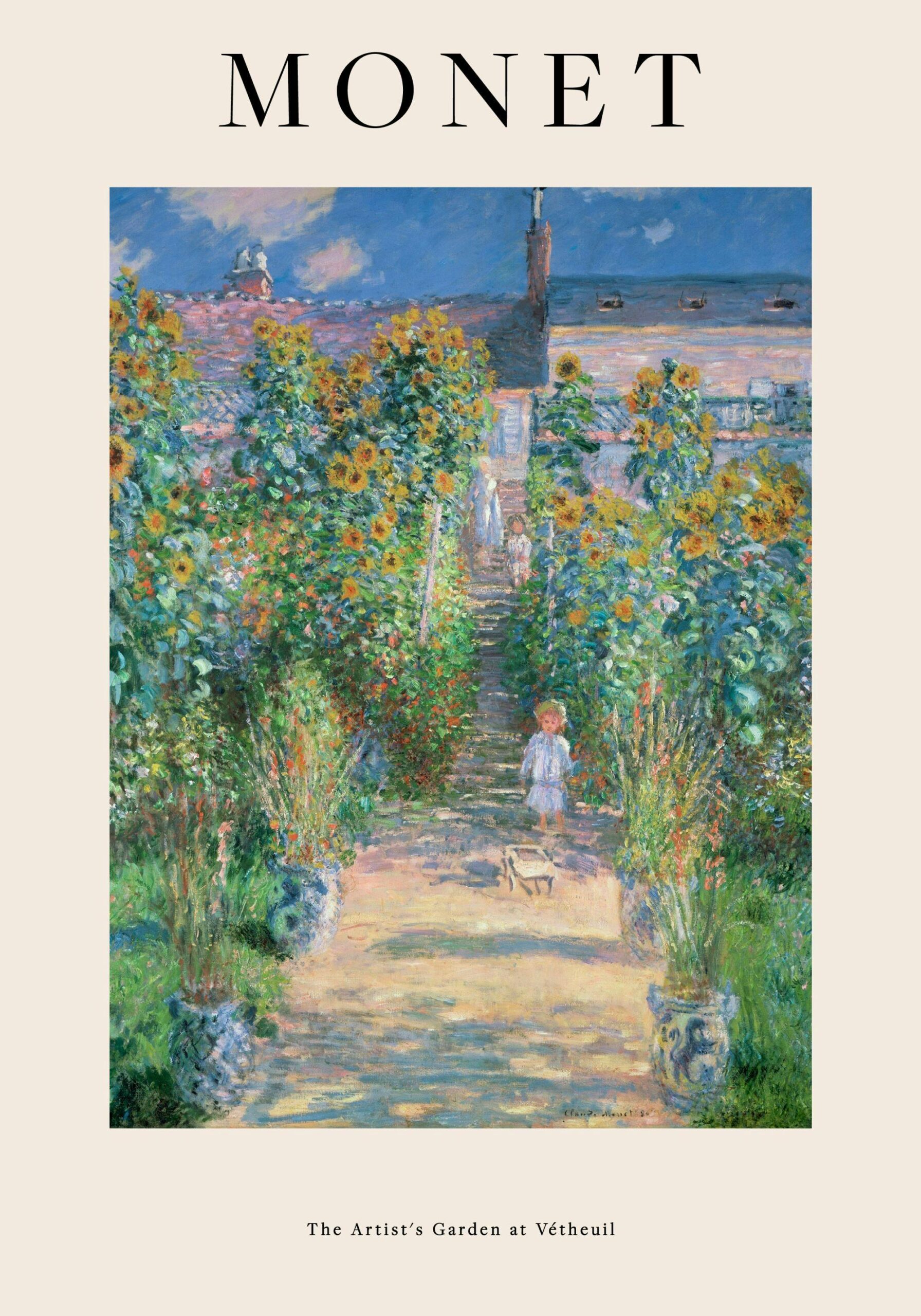
In 1883, Monet settled in Giverny, where he created an elaborate garden with a pond, a Japanese-style bridge and water lilies. The garden became one of his most important subjects. His Water Lilies paintings range from intimate views of the pond to vast canvases that surround the viewer with reflections, blossoms and shifting colour.
Legacy
Monet continued painting into his later years, even as his eyesight was affected by cataracts. His art influenced generations of painters, particularly through its freedom of colour and emphasis on perception. The large Water Lilies panels, now displayed in Paris at the Musée de l’Orangerie, are often regarded as a landmark in the development of modern painting.
Today, Monet’s work is admired around the world. His paintings remind viewers that a landscape is never quite the same twice: light, weather and the moment itself are always changing.
6 Tips for Appreciating Claude Monet’s Art
- Look for Claude Monet’s changing light and colour.
- Notice how loose brushstrokes suggest movement.
- Compare his paintings of the same scene at different times.
- Explore his famous water-lily paintings.
- Visit Monet’s garden at Giverny, if you can.
- Take time to view his paintings from a little distance.
Look for Claude Monet’s changing light and colour.
Look closely at how Claude Monet used changing light and colour to bring a scene to life. He often painted the same subject at different times of day or in different weather, capturing subtle shifts in atmosphere with lively brushstrokes and carefully chosen hues. Notice how shadows, reflections and the colours of the sky transform familiar landscapes, inviting you to experience each moment as Monet saw it.
Notice how loose brushstrokes suggest movement.
Notice how Monet’s loose brushstrokes suggest movement and bring each scene to life. Rather than defining every detail, he used quick, expressive marks to capture shifting light, rippling water and the changing atmosphere around him.
Compare his paintings of the same scene at different times.
Compare Claude Monet’s paintings of the same scene at different times to see how changing light, weather and seasons transform its colours and mood. His series of haystacks, poplar trees and Rouen Cathedral show how he returned to familiar subjects to capture each moment’s distinct atmosphere. Looking closely at the differences can help you appreciate his fascination with light and the fleeting nature of what we see.
Explore his famous water-lily paintings.
Explore Claude Monet’s famous water-lily paintings to see how he captured changing light, colour and reflections across his garden pond at Giverny. Rather than focusing on fine detail, Monet used expressive brushstrokes to create an immersive impression of the water, flowers and surrounding greenery. Comparing several paintings reveals how the same peaceful scene can feel entirely different as the light and seasons change.
Visit Monet’s garden at Giverny, if you can.
If you can, visit Claude Monet’s garden at Giverny in northern France. The water lily pond, Japanese-style bridge and colourful flower beds bring many of his most famous paintings to life, offering a chance to experience the changing light and natural beauty that inspired his work.
Take time to view his paintings from a little distance.
Step back a little when viewing a Monet painting. From a distance, the loose brushstrokes and flecks of colour blend together, revealing the scene’s atmosphere, light and movement. Then move closer to appreciate how these individual marks create the overall impression.