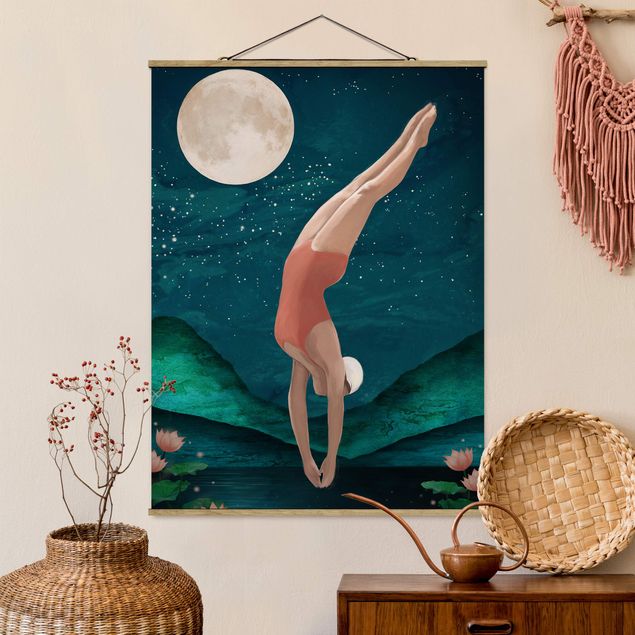
The Enchanting Art of Moon Painting
Painting the moon has been a source of inspiration for artists throughout history. The moon’s mystical allure, with its changing phases and ethereal glow, has captivated the imagination of painters across cultures and time periods.
From serene nightscapes to dreamy lunar landscapes, moon painting allows artists to explore themes of mystery, romance, and introspection. The subtle play of light and shadow on the moon’s surface creates a mesmerizing visual effect that challenges artists to capture its essence on canvas.
Many artists use various techniques to depict the moon in their paintings. Some opt for realistic portrayals, capturing every crater and detail with precision, while others take a more abstract approach, using symbolism and metaphor to convey the moon’s symbolic significance.
One of the most iconic examples of moon painting is Vincent van Gogh’s “Starry Night,” where the swirling night sky and crescent moon evoke a sense of wonder and cosmic beauty. The interplay of colors and textures in van Gogh’s masterpiece reflects his emotional connection to the night sky and celestial bodies.
Contemporary artists continue to draw inspiration from the moon, experimenting with new styles and interpretations to push the boundaries of traditional moon painting. Whether through realistic depictions or imaginative interpretations, each artist brings their unique perspective to this timeless subject.
As you gaze upon a moonlit painting, allow yourself to be transported into a world of mystery and magic, where the celestial orb casts its gentle light over landscapes both real and imagined. Moon painting invites us to contemplate our place in the universe and marvel at the beauty that surrounds us each night.
Mastering Moon Painting: 6 Essential Tips for Realistic Lunar Art
- Use a light pencil sketch to outline the moon shape and its craters before painting.
- Blend different shades of grey and white to create a realistic moon texture.
- Consider using a circular stencil or compass to ensure a perfectly round moon shape.
- Experiment with adding subtle hints of blue or purple to add depth and dimension to the moon.
- Use a fine brush or sponge for detailing the craters and surface texture of the moon.
- Allow each layer of paint to dry completely before adding additional layers for better blending.
Use a light pencil sketch to outline the moon shape and its craters before painting.
When embarking on a moon painting, a helpful tip is to begin by creating a light pencil sketch to outline the shape of the moon and its intricate craters. This preliminary sketch serves as a guide for capturing the unique features of the moon’s surface with accuracy and detail. By carefully mapping out the lunar landscape before applying paint, artists can ensure a more precise and realistic portrayal of this celestial body in their artwork.
Blend different shades of grey and white to create a realistic moon texture.
To create a realistic moon texture in your painting, blending different shades of grey and white is essential. By carefully layering and blending these tones, you can capture the subtle variations in light and shadow that give the moon its unique appearance. Start with a base of light grey and gradually add darker shades to create depth and dimension. Pay attention to the transitions between light and dark areas to achieve a lifelike texture that mimics the craters and contours of the lunar surface. Experimenting with blending techniques will help you achieve a convincing portrayal of the moon in your artwork.
Consider using a circular stencil or compass to ensure a perfectly round moon shape.
When creating a moon painting, it is advisable to consider using a circular stencil or compass to guarantee a flawless round shape for the moon. This technique helps artists achieve precision and consistency in depicting the moon’s iconic form on their canvas. By utilizing a stencil or compass, painters can ensure that the moon’s shape is accurately rendered, adding a touch of realism and aesthetic appeal to their artwork.
Experiment with adding subtle hints of blue or purple to add depth and dimension to the moon.
To enhance the visual impact of your moon painting, consider experimenting with incorporating subtle hints of blue or purple tones. By delicately blending these hues into the moon’s surface, you can create a sense of depth and dimension that elevates the overall composition. The incorporation of these cool tones can evoke a mystical ambiance and add a touch of ethereal beauty to your artwork, capturing the enchanting essence of the moon in a unique and captivating way.
Use a fine brush or sponge for detailing the craters and surface texture of the moon.
For achieving intricate details such as craters and surface texture in moon painting, it is recommended to use a fine brush or sponge. These tools allow artists to capture the nuanced features of the moon’s surface with precision and delicacy. By carefully applying paint with a fine brush or sponge, artists can create realistic textures that enhance the overall visual impact of their moon paintings. The use of these tools enables artists to bring depth and dimension to their artwork, adding a layer of authenticity to their portrayal of the lunar landscape.
Allow each layer of paint to dry completely before adding additional layers for better blending.
To achieve seamless blending in moon painting, it is essential to allow each layer of paint to dry thoroughly before applying additional layers. By giving the paint ample time to dry, artists can prevent colors from mixing unintentionally and ensure a smoother transition between shades. This patient approach to layering not only enhances the blending effect but also allows for greater control over the final appearance of the moon, resulting in a more polished and professional-looking artwork.