The Scream: Edvard Munch’s Image of Anxiety
Few works of art are as instantly recognisable as The Scream. Created by Norwegian artist Edvard Munch, the image shows a solitary figure standing on a bridge, hands pressed to its face, beneath a turbulent sky. Its stark colours and distorted forms have made it one of the most enduring symbols of fear and anxiety in modern art.
A moment of inspiration
Munch made the first version of The Scream in 1893. The work was part of a larger group of paintings and drawings he called The Frieze of Life, which explored themes including love, loss, jealousy and death.
In a diary entry, Munch described walking at sunset with friends when the sky seemed to turn red. He recalled feeling exhausted and anxious, and sensing what he described as a scream passing through nature. This experience is often linked to the painting, although The Scream is not simply a record of one moment. It transforms a personal feeling into a powerful, universal image.
What can be seen in the painting?
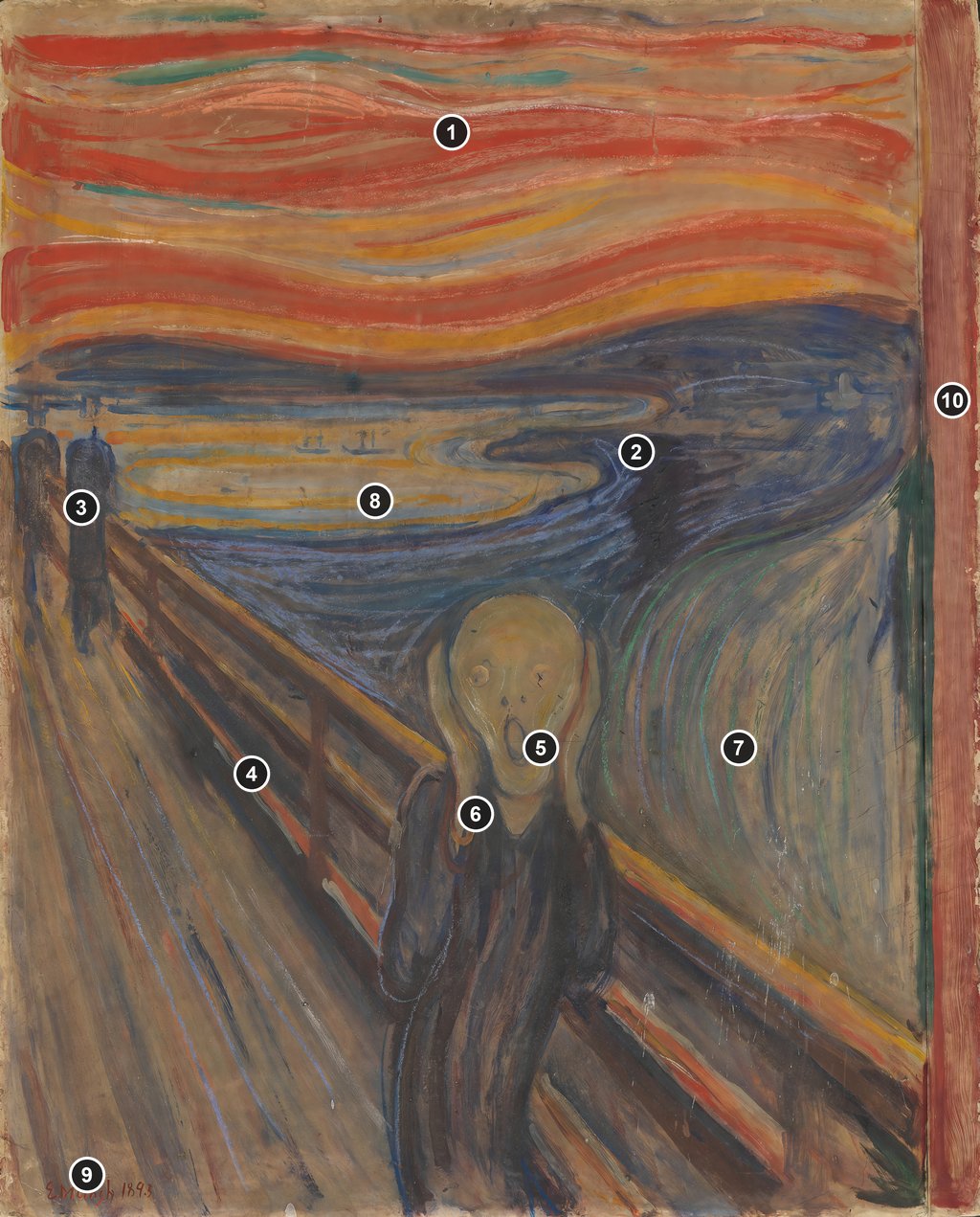
In the foreground, a figure with a skull-like face stands on a bridge or raised walkway. Two people are visible further back, while a landscape of water, hills and sky stretches behind them. The sweeping lines of the scenery appear to echo the figure’s distress, making the whole scene seem to tremble.
The figure’s identity and expression remain open to interpretation. It may appear to be screaming, or it may be covering its ears in response to a frightening sound. That uncertainty is part of the work’s emotional force: the viewer is drawn into the moment without being given a clear explanation for it.
Colour, movement and emotion
Munch uses vivid bands of red, orange, blue and dark brown to create a sense of unease. The bridge’s straight lines contrast with the curving sky and landscape, directing the eye towards the figure while making the world around it feel unstable. Rather than representing nature in a realistic way, Munch reshapes it to express an inner state.
This approach helped make The Scream a landmark of modern art. Its expressive lines and heightened colours place feeling above faithful representation, anticipating ideas that would become important to later artists and movements.
More than one version
Munch returned to the subject several times, producing versions in different media, including paintings, pastels and a lithograph. These works are not identical; each has its own colours and qualities. The best-known painted version from 1893 is held by Norway’s National Museum, while another version is in the collection of the MUNCH museum in Oslo.
A lasting cultural image
Over time, the central figure has travelled far beyond galleries. Its silhouette has appeared in popular culture, advertising and everyday visual language, often as a shorthand for shock or panic. Yet the original work is more complex than a simple expression of fright. It speaks to isolation, vulnerability and the unsettling feeling that the world itself can become overwhelming.
More than a century after it was made, The Scream continues to resonate because it gives visible form to emotions that can be difficult to express. Its figure may be alone on the bridge, but the feeling it conveys is widely understood.
The Scream by Edvard Munch: Six Frequently Asked Questions
- Did Van Gogh paint The Scream?
- Why is it called The Scream?
- What is the story behind The Scream?
- Which Edvard Munch painting sold for $120 million in 2012?
- Why is The Scream so famous?
- What did Edvard Munch say about The Scream?
Did Van Gogh paint The Scream?
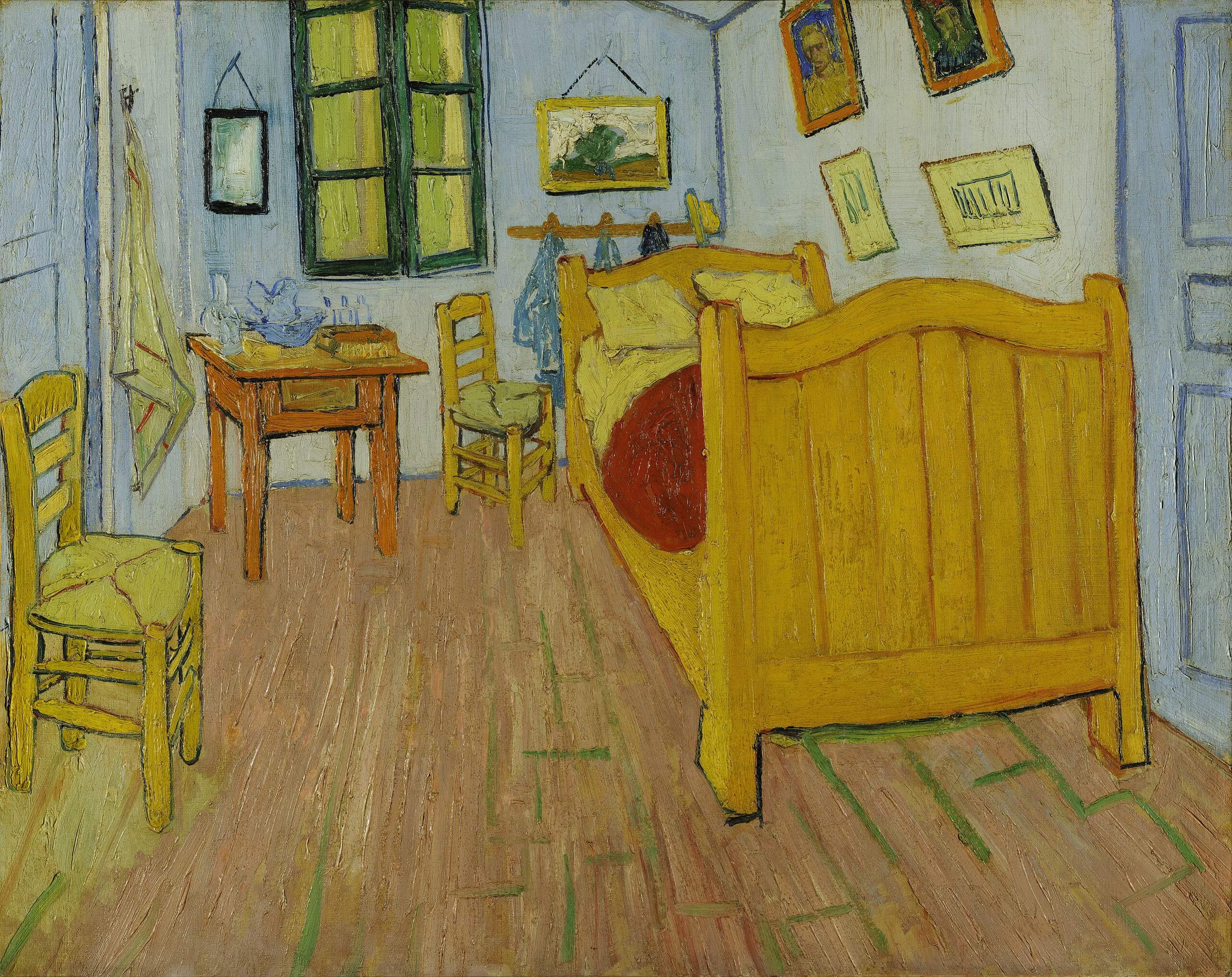
No, Vincent van Gogh did not paint The Scream. The famous artwork was created by Norwegian artist Edvard Munch, who made several versions of it from 1893 onwards. Van Gogh and Munch were contemporaries, and both used bold colour and expressive brushwork to convey emotion, which may help explain the confusion.
Why is it called The Scream?
It is called The Scream because the work captures a moment of intense distress, with its central figure appearing to cry out—or cover its ears against a cry. The title also reflects Edvard Munch’s account of feeling that a scream was passing through nature as he watched the sky at sunset. Rather than depicting only the figure’s voice, the artwork suggests that the whole landscape is filled with the same unsettling sound.
What is the story behind The Scream?
Edvard Munch’s The Scream was inspired by an experience he described in his diary: while walking with friends at sunset, he felt exhausted and anxious as the sky turned blood-red, and sensed “a great scream” passing through nature. Painted in 1893 as part of his series The Frieze of Life, the work transforms that personal moment into a striking image of fear, isolation and emotional overwhelm. The figure’s open-mouthed expression is often read as a scream, though it may also be covering its ears against the sound.
Which Edvard Munch painting sold for $120 million in 2012?
The Edvard Munch painting that sold for about $120 million in 2012 was a pastel version of The Scream, which fetched US$119.9 million at a Sotheby’s auction in New York. At the time, it set a record for the most expensive artwork sold at auction.
Why is The Scream so famous?
The Scream is famous for its striking image of a figure overwhelmed by fear, set against a vivid, swirling sky. Edvard Munch’s bold colours and distorted forms capture feelings of anxiety and isolation in a way that many people recognise, even without knowing the story behind the artwork. Its simple yet powerful composition has also made it easy to reproduce and reference in popular culture, helping it become one of the most familiar images in modern art.
What did Edvard Munch say about The Scream?
Edvard Munch described the experience that inspired The Scream in a diary entry: while walking with friends at sunset, he saw the sky turn “blood red”, felt tired and anxious, and stopped, trembling with fear. He wrote that he sensed “an infinite scream passing through nature”. The account suggests the painting expresses not only a person’s distress, but also Munch’s feeling that the surrounding world was echoing it.