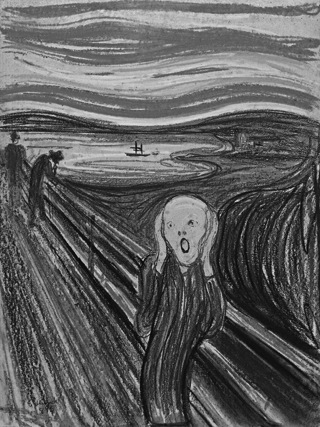
Edvard Munch’s The Scream: A Lasting Image of Anxiety
Few works of art are as instantly recognisable as Edvard Munch’s The Scream. Its twisting sky, vivid colours and solitary figure have become familiar around the world. Yet the image is more than a striking portrait: it is a powerful expression of fear, isolation and the unease of modern life.
The story behind the image
Munch created the first version of The Scream in 1893, while living in Norway. The work grew from an experience he recorded in his diary. During an evening walk with friends, he saw the sky turn red and felt, as he described it, that “an infinite scream passed through nature”. The scene is often linked to a viewpoint at Ekeberg, overlooking Oslofjord.
In the image, a figure stands on a bridge, holding its hands to its head. Two people walk away in the distance, while the landscape seems to ripple around the central figure. Munch’s diary suggests that the figure may be reacting to a scream heard in nature, rather than simply crying out itself. That ambiguity gives the work much of its emotional force.
More than one version
The Scream is not a single, unique image. Munch made several versions in different materials, including paintings and pastels, and produced a lithograph that allowed the composition to be reproduced. The versions vary in colour and detail, but each retains the same haunting figure and turbulent setting.
The 1893 painted version is held by the National Museum in Oslo. Other versions are in the collection of the Munch Museum, also in Oslo, while another pastel version is privately owned. The different works reflect Munch’s continuing interest in the subject, rather than a single attempt to settle on a final image.
A central work in Munch’s art
Munch returned throughout his career to themes of love, anxiety, illness and death. He brought many of these works together in what he called the Frieze of Life, a series exploring the stages and emotional pressures of human existence. The Scream is among its best-known images.
Its expressive lines and intense colour depart from realistic representation. Instead of recording a scene exactly as it appeared, Munch used the landscape to convey an inner state. The bridge, the distant figures and the blood-red sky all contribute to a sense that the world itself has become unsettling.
Why The Scream still resonates
The figure’s anonymity helps make the work widely relatable. It has no clearly defined identity, and its exaggerated pose can suggest panic, despair or a feeling of being overwhelmed. The image has consequently become a lasting symbol of anxiety, appearing in popular culture far beyond the art world.
More than a century after it was created, The Scream continues to speak to viewers because it gives visible form to an emotion that can be difficult to express. Munch’s image does not explain fear; it makes that feeling impossible to ignore.
Edvard Munch’s The Scream: Five FAQs on Its Value, Controversy, Art Style and Popularity
- How much is The Scream painting worth?
- Why was The Scream controversial?
- What type of artwork is The Scream?
- How much is The Scream worth today?
- Why is The Scream so popular?
How much is The Scream painting worth?
The value of The Scream depends on which version is meant. In 2012, one pastel version sold at Sotheby’s in New York for US$119.9 million, setting a record at the time for a work of art sold at auction. The other versions, including those held by the National Museum and the Munch Museum in Oslo, are not for sale, so they have no current market price; any estimate of their value would be speculative.
Why was The Scream controversial?
The Scream was controversial because its raw, unconventional style challenged expectations of what a finished painting should look like. Munch’s distorted figure, turbulent lines and vivid colours were seen by some viewers as disturbing or even ugly, rather than beautiful or realistic. The work also confronted audiences with anxiety and psychological distress—subjects rarely shown so openly at the time. These qualities helped make it a landmark of modern art, even as they unsettled some of its early viewers.
What type of artwork is The Scream?
The Scream is an Expressionist artwork by Norwegian artist Edvard Munch. He created several versions of the image in different media, including paintings, pastels and a lithograph. Rather than depicting a scene realistically, Munch uses vivid colour, distorted forms and sweeping lines to convey intense anxiety and emotional distress.
How much is The Scream worth today?
There is no single current price for The Scream, as Edvard Munch created several versions in different media. One pastel version sold at auction in 2012 for US$119.9 million, including the buyer’s premium, but that historic sale does not establish the value of the other versions today. Most are held in public collections, and their value would depend on factors such as the specific version, condition and provenance; any current estimate would be speculative.
Why is The Scream so popular?
The Scream remains popular because it gives striking visual form to emotions many people recognise, including anxiety, loneliness and feeling overwhelmed. Its vivid colours, swirling landscape and anonymous figure make the image instantly memorable, while leaving room for viewers to interpret what is happening. Munch’s expressive style also helped the work become a lasting symbol of modern life—and its familiarity in popular culture continues to introduce it to new audiences.