Georgia O’Keeffe: A Distinctive Voice in Modern Art
Georgia O’Keeffe (1887–1986) was one of the most influential American artists of the 20th century. Known for her striking paintings of flowers, New York skyscrapers and the landscapes of New Mexico, she developed a visual language that was bold, carefully observed and unmistakably her own.
Early life and artistic beginnings
O’Keeffe was born in 1887 in Sun Prairie, Wisconsin. She studied art at the School of the Art Institute of Chicago and the Art Students League in New York, where she received traditional training. Over time, however, she sought a more personal approach to making art.
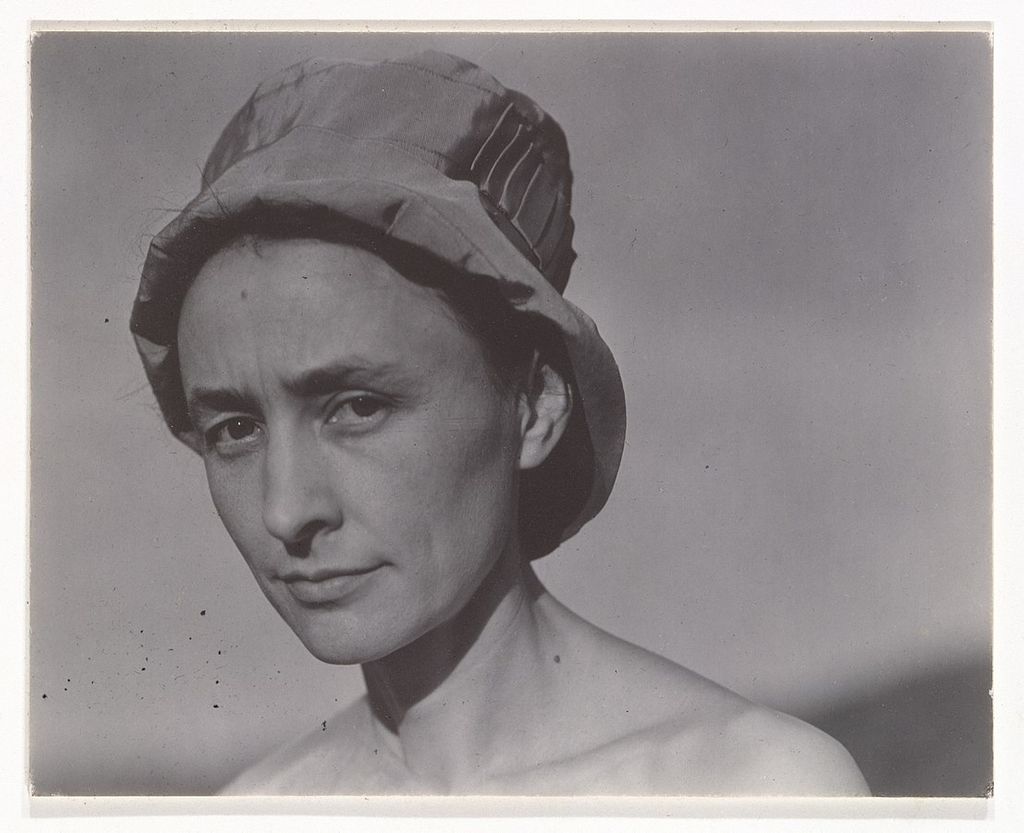
In the 1910s, O’Keeffe began creating abstract drawings in charcoal. These works caught the attention of photographer and gallery owner Alfred Stieglitz, who exhibited them in New York in 1916. Stieglitz later became her husband and an important supporter of her career. His photographs of O’Keeffe also helped shape her public image, although her own artistic achievements remained central to her success.
A recognisable style
O’Keeffe’s paintings often enlarge familiar subjects until they become almost abstract. In her flower paintings, petals fill the canvas, drawing attention to their shapes, colours and delicate details. Works such as Red Canna (1924) and Jimson Weed/White Flower No. 1 (1932) show her ability to transform natural forms into powerful compositions.
Her art also reflected the changing world around her. During the 1920s, she painted New York’s tall buildings, including the city’s skyscrapers and the Shelton Hotel, where she lived for a time. These works present the city as a place of dramatic scale and modern energy.
O’Keeffe’s flowers have often been given symbolic interpretations, particularly by critics who connected them with sexuality. She resisted being confined to those readings and encouraged viewers to look closely at the paintings themselves. Her work can be appreciated for its careful observation, strong design and expressive use of colour.
New Mexico and the landscape
O’Keeffe first visited New Mexico in 1929 and returned there regularly before making it her permanent home in 1949. The region became one of her most important subjects. Its open skies, desert hills, weathered buildings and animal bones offered new forms and colours for her work.
She lived and worked at several places in the state, including a house in Abiquiú and a home near Ghost Ranch. Paintings such as Ram’s Head, White Hollyhock-Hills (1935) bring together the natural forms that fascinated her with the distinctive landscape of the American South-west.
Legacy
In 1946, O’Keeffe became the first woman to have a retrospective exhibition at the Museum of Modern Art in New York. She continued to work for decades, exploring new subjects and techniques even as her eyesight began to fail in later life.
Today, O’Keeffe is celebrated for more than her instantly recognisable flowers. Her career demonstrates a sustained commitment to looking closely, choosing subjects on her own terms and developing a style that resisted easy categorisation. The Georgia O’Keeffe Museum in Santa Fe, New Mexico, preserves and presents her work, while her paintings continue to influence artists and captivate audiences around the world.
Georgia O’Keeffe: 9 Key Facts About Her Life and Art
- Georgia O’Keeffe was born in Wisconsin in 1887.
- She became a leading figure in American modern art.
- Look closely at her large-scale flower paintings.
- She also painted New Mexico’s landscapes and buildings.
- Skulls and bones appear in many of her desert paintings.
- Photographer Alfred Stieglitz was her husband and artistic supporter.
- O’Keeffe moved to New Mexico in 1949.
- She was the first woman to have a retrospective at MoMA.
- She died in 1986, aged 98.
Georgia O’Keeffe was born in Wisconsin in 1887.
Georgia O’Keeffe was born in 1887 in Sun Prairie, Wisconsin, where she grew up on a dairy farm with her family. Her early surroundings in the American Midwest were quite different from the desert landscapes and New Mexico scenes that later became closely associated with her art.
She became a leading figure in American modern art.
Georgia O’Keeffe became a leading figure in American modern art through her distinctive, bold approach to painting. Her close-up flower studies, city scenes and depictions of the New Mexico landscape transformed familiar subjects into striking compositions, helping establish her as one of the most influential artists of the 20th century.
Look closely at her large-scale flower paintings.
Look closely at Georgia O’Keeffe’s large-scale flower paintings: by enlarging petals and blooms to fill the canvas, she invites you to notice their curves, colours and fine details in a new way. Take time to follow the shapes and shifts in tone, and you may find that a familiar flower becomes an almost abstract landscape. While the paintings have inspired many interpretations, O’Keeffe encouraged viewers to look carefully and respond to what they see for themselves.
She also painted New Mexico’s landscapes and buildings.
Georgia O’Keeffe found lasting inspiration in New Mexico’s landscapes and buildings. She painted its wide skies, desert hills and distinctive colours, as well as weathered churches and adobe homes. These works reflect her close observation of the region and show how its forms and sense of space became central to her art.
Skulls and bones appear in many of her desert paintings.
Skulls and bones appear in many of Georgia O’Keeffe’s desert paintings, where she transforms these stark forms into striking studies of shape, texture and colour. Rather than treating them simply as symbols of death, she was drawn to their sculptural qualities and the way they stood out against the vast New Mexico landscape. In works such as Ram’s Head, White Hollyhock-Hills, bones and flowers sit alongside distant hills, bringing together the desert’s harshness and unexpected beauty.
Photographer Alfred Stieglitz was her husband and artistic supporter.
Photographer Alfred Stieglitz was Georgia O’Keeffe’s husband and an important supporter of her artistic career. After recognising her work in 1916, he exhibited her drawings in his New York gallery and helped introduce her art to a wider audience. Their relationship also brought O’Keeffe into contact with leading artists and photographers of the time, though she went on to establish a distinctive reputation in her own right.
O’Keeffe moved to New Mexico in 1949.
After visiting New Mexico regularly from 1929, Georgia O’Keeffe moved there permanently in 1949. The region’s wide-open skies, desert landscapes and distinctive colours became a lasting source of inspiration for her work. She made her home in Abiquiú and continued painting the natural forms and scenery that had captivated her.
She was the first woman to have a retrospective at MoMA.
In 1946, Georgia O’Keeffe became the first woman to receive a retrospective exhibition at the Museum of Modern Art (MoMA) in New York. The landmark show recognised her distinctive contribution to modern art and brought together works from across her career, including paintings of flowers, cityscapes and the landscapes of New Mexico.
She died in 1986, aged 98.
Georgia O’Keeffe died on 6 March 1986, aged 98, in Santa Fe, New Mexico. She had spent much of her later life in the state, whose landscapes inspired many of her best-known paintings. Her long career left a lasting mark on modern art, and her work continues to be admired around the world.