Michelangelo: The Artist Who Shaped the Renaissance
Michelangelo Buonarroti (1475–1564) was one of the most influential artists of the Italian Renaissance. Celebrated as a sculptor, painter, architect and poet, he created works that continue to inspire people around the world. His remarkable ability to capture the human body, emotion and movement helped define Renaissance art.
Early life and artistic beginnings
Michelangelo was born in Caprese, Tuscany, and grew up in Florence, a leading centre of art and learning. As a young man, he trained in the workshop of the painter Domenico Ghirlandaio and studied classical sculpture. Florence’s rich artistic culture, together with his close observation of the human form, had a lasting influence on his work.
Michelangelo soon attracted the attention of powerful patrons, including the Medici family. His early sculptures revealed the technical skill and expressive force that would become hallmarks of his career.
Masterpieces in stone
Michelangelo considered himself first and foremost a sculptor. Among his best-known works is Pietà, created when he was in his early twenties. The marble sculpture depicts Mary holding the body of Christ, combining intricate detail with a quiet sense of grief and tenderness.
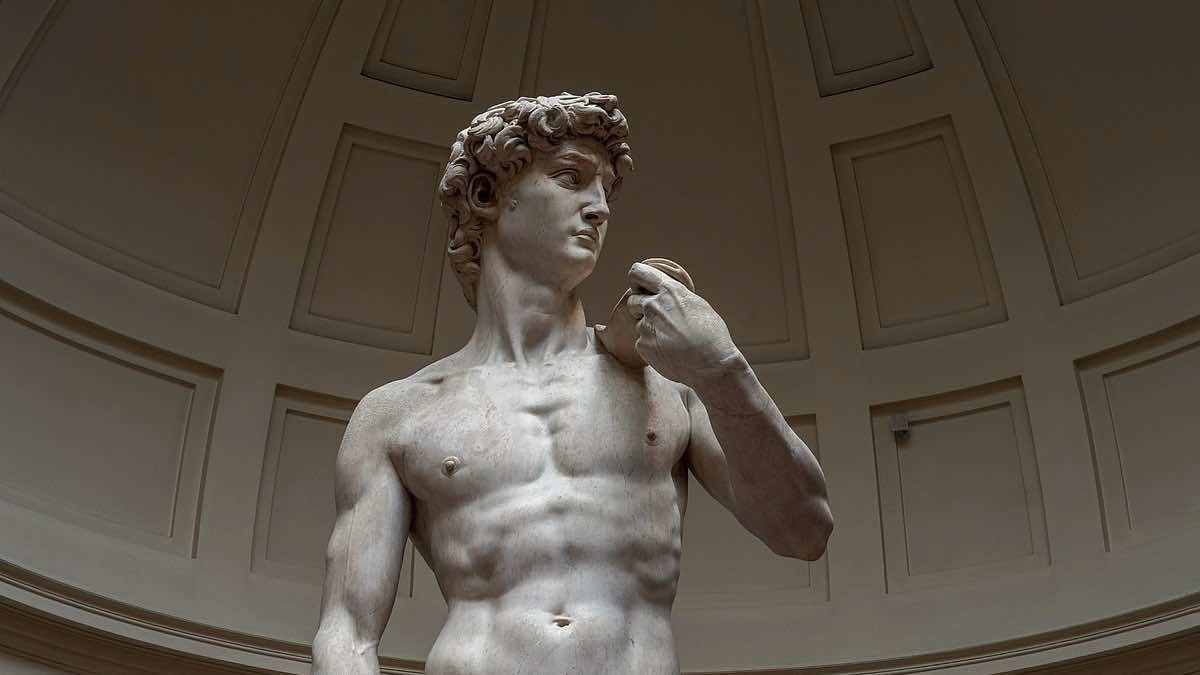
His colossal David, carved from a single block of marble, portrays the biblical hero before his encounter with Goliath. Rather than showing David after his victory, Michelangelo captures him in a moment of alert anticipation. The statue became a powerful symbol of Florence and a landmark in the history of sculpture.
The Sistine Chapel ceiling
Although Michelangelo preferred sculpting, he is also renowned for painting the ceiling of the Sistine Chapel in the Vatican. Commissioned by Pope Julius II, the vast project took several years to complete. Its scenes from the Book of Genesis include the famous image of God reaching towards Adam, known as The Creation of Adam.
The ceiling’s energetic figures, dramatic compositions and detailed anatomy transformed the chapel into one of the most celebrated artistic spaces in the world. Michelangelo later painted The Last Judgment on the chapel’s altar wall, depicting the final judgement of humanity with striking intensity.
Architecture and later years
Michelangelo’s talents extended to architecture. In later life, he worked on several major projects in Rome, including the design of the dome of St Peter’s Basilica. Though he did not live to see the dome completed, his plans shaped the building’s lasting appearance.
He continued to work into old age, producing drawings, poetry and sculptures that explored themes of faith, mortality and the limits of human life. His later works often have a raw, unfinished quality, suggesting a search for expression beyond technical perfection.
A lasting legacy
Michelangelo’s achievements helped set new standards for artistic skill and ambition. His works demonstrate both extraordinary craftsmanship and a profound interest in human emotion. Centuries later, his sculptures, paintings and architectural designs remain central to the story of Western art and to the enduring legacy of the Renaissance.
Five Tips for Appreciating Michelangelo’s Masterpieces
- Look closely at the detail in Michelangelo’s sculptures.
- Notice how his figures show movement and emotion.
- Learn the stories behind the Sistine Chapel paintings.
- View the artwork from different angles.
- Take your time—there’s plenty to discover.
Look closely at the detail in Michelangelo’s sculptures.
Look closely at the detail in Michelangelo’s sculptures: the carefully carved muscles, veins and folds of skin bring marble figures to life. Notice how small changes in posture and facial expression suggest movement and emotion, revealing the artist’s deep understanding of the human body. In works such as David and Pietà, these details reward a closer look and make each figure feel remarkably lifelike.
Notice how his figures show movement and emotion.
When looking at Michelangelo’s work, notice how each figure seems ready to move, even when carved from stone or painted on a ceiling. Twisting bodies, expressive gestures and carefully observed muscles create a sense of energy, while faces and poses convey emotions such as grief, tension and determination. In works like David and the Pietà, these details make the figures feel vivid and human.
Learn the stories behind the Sistine Chapel paintings.
Learning the stories behind the Sistine Chapel paintings can make Michelangelo’s work even more fascinating. The ceiling’s scenes are drawn mainly from the Book of Genesis, from the Creation of the world and Adam and Eve to the story of Noah. Look closely at how Michelangelo connects these biblical episodes through expressive figures, gestures and details, each adding meaning to the larger story. Familiarity with the narratives helps visitors appreciate not only the beauty of the paintings, but also the ideas and emotions woven into them.
View the artwork from different angles.
View Michelangelo’s artwork from different angles to appreciate how carefully he shaped form, movement and expression. A sculpture such as David reveals new details as you walk around it, while the figures in his paintings create depth and drama through their poses and arrangement. Take your time, and notice how each viewpoint changes what you see.
Take your time—there’s plenty to discover.
Take your time exploring Michelangelo’s work—there’s plenty to discover. Look beyond the famous figures to notice the fine details, expressive gestures and clever compositions in his sculptures, paintings and architecture. Each piece rewards a closer look, revealing new ideas and emotions with every visit.